|
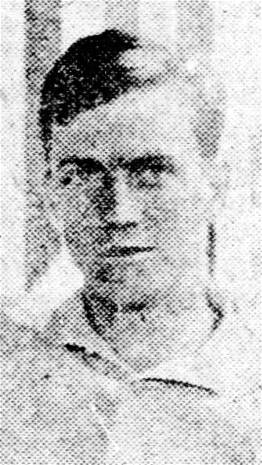
Shipfitter 2nd Class John P. Reitmeyer
United States Navy (1929-1933 * 1942)


John Paul Reitmeyer was born on July
18, 1909, the fourth of ten children of Rose and August Reitmeyer. He had six
brothers, Harry, Frederick, Vincent, Leo, Gilbert and Ralph, and three sisters, Frances, Rita and Jean. The Reitmeyer family
lived at 1829 Woodward Avenue, then moved to 516 Bellaire
Avenue in 1930.
John attended Resurrection
Elementary and graduated from South Hills High School in 1927. He took
a job working with his grandfather at Moorehead-Reitmeyer Electric Motor
Repair Shop in Oakdale, where he was employed for two years.
In December 1929, John enlisted
in the United States Navy. During his four year tour of duty, he took
flying lessons, but never qualified as a Navy pilot. After his enlistment
ended in 1933, John returned to Pittsburgh and the family's
new home on Bellaire Avenue.
He went back to work with his
grandfather for a short time, then moved on to the sheet metal trade.
John became an ironworker, employed at the Dravo Corporation's shipbuilding
yard on Neville Island. He also spent time with the Heyl-Patterson Construction
Company, doing metal work at facilities throughout the state.

The Dravo Corporation shipbuilding
yard on Neville Island.
After the Japanese attack on Pearl
Harbor on December 7, 1941, John re-enlisted in the Navy on January 6, 1942
and was rated as a Shipfitter 2nd Class, assigned to the USS Juneau (CL-52), a new ship moored at the Brooklyn Naval
Yard.
A naval Shipfitter's duties include
fabricating, assembling and erecting all structural parts of a ship. They
were the skilled mechanics who kept a ship at sea structurally sound. In
battle, they were called upon to perform whatever tasks necessary to keep
their ship seaworthy.
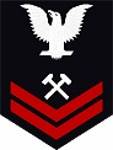
Before leaving for the war, John
commented to family members that it was his duty to go back to sea on this
recently commissioned ship because so many of the sailors were so young,
and had never before been on a ship, let alone out to sea. He felt strongly
that his experience was needed on the USS Juneau.
The USS Juneau was a light cruiser commissioned in February
1942. After a quick shakedown cruise and blockade duty near Martinique, the
ship docked in New York to make alterations. John was able to return home on
leave to visit with the Reitmeyer family in Brookline. His youngest brother
Ralph recalls, "That was in July of 1942."
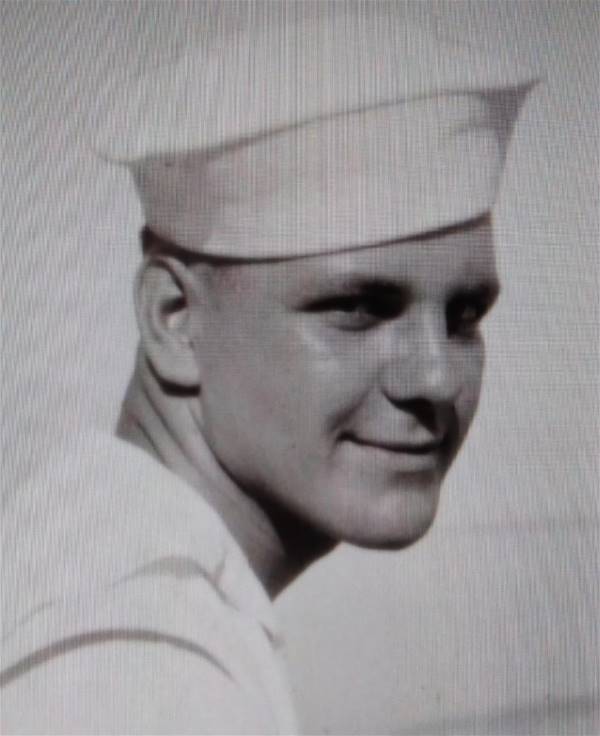
Once his leave was up, Ralph remembers
taking his brother to the Pennsylvania Railroad Station on Grant Street, in
downtown Pittsburgh, for the trip back to the Brooklyn Navy Yard. Ralph had
only recently earned his driver's license.
"John was always kidding me about my
poor driving," Ralph says. "I was a nervous wreck."
"He boarded the train and that was
the last time I saw him."
Shipfitter 2nd Class John Reitmeyer
rejoined the Juneau in New York in late-July 1942. The ship was performing patrol
and escort duties at the time. On August 22, the Juneau departed for the South
Pacific. There, the ship would support United States operations at Guadalcanal,
seeing action in two of the major naval engagements that contributed to the American
victory at Guadalcanal, which halted Japanese expansion towards Australia
and turned the tide of battle in favor of the Allies.

Shipfitter 2nd Class John Reitmeyer (back
right) and shipmates on the USS Juneau.
After stopping briefly at the Tonga Islands
and New Caledonia, she rendezvoused on September 10 with Task Force 18 under the
command of Rear Admiral Leigh Noyes, flying his flag on the aircraft carrier
Wasp.
The following day, Task Force 17, which
included the carrier Hornet, combined with Admiral Noyes' unit to form Task Force
61, whose mission was to ferry fighter aircraft to Guadalcanal. On September 15,
Wasp took three torpedo hits from the Japanese submarine I-19. With fires raging
out of control, the carrier was sunk. The Juneau and screen destroyers rescued
1,910 survivors of Wasp and returned them to Espiritu Santo, New Hebrides, on
September 16. The next day, the Juneau rejoined Task Force 17.
In October 1942, operating with the Hornet
group, Task Force 17 and the USS Juneau participated in the Buin-Faisi-Tonolai Raid
and in the Battle of the Santa Cruz Islands. Then, in November, the ship was present at
the Naval Battle of Guadalcanal.

The Light Cruiser USS Juneau (CL-52)
in 1942.
On November 13, 1942, a Japanese
task force, including several warships escorting a troop convoy, approached
Guadalcanal. This was a major attempt by the Japanese to reinforce their
island garrison and launch an offensive operation to clear the island of the
Americans.
As the Japanese ships neared Guadalcanal,
they were met by Rear Admiral Daniel J. Callaghan's relatively small Landing
Support Group, which included the USS Juneau. At 01:48 the two forces met and
began to exchange fire. A fierce battle ensued.
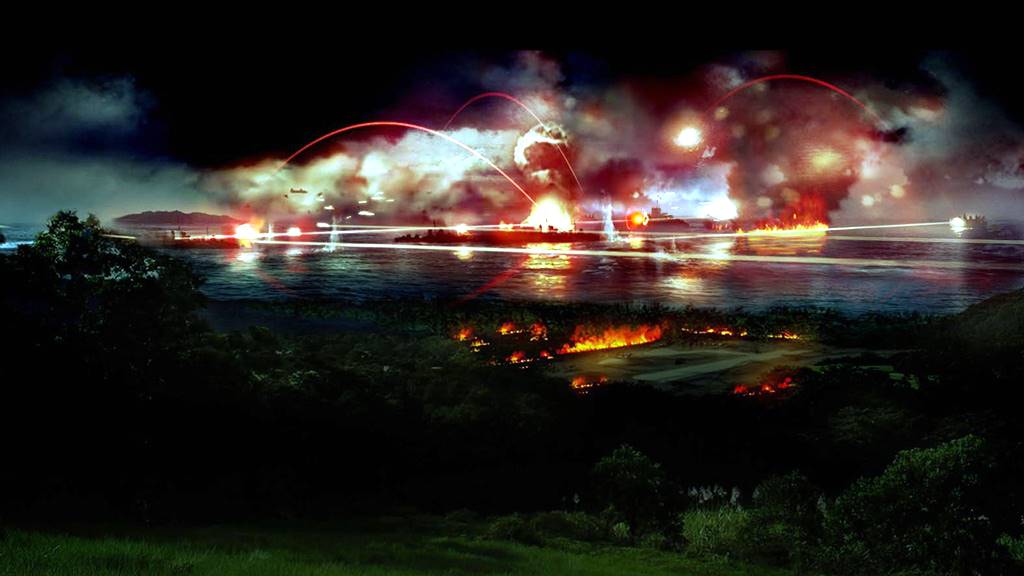
A painting that depicts the Naval
Battle of Guadalcanal from the viewpoint of the soldiers on the
island.
The USS Juneau was hit by a torpedo
and began to list. The ship was forced to withdraw. By morning, the Japanese
force had been beaten back, and their reinforcement effort halted. This was
a major turning point in the battle of Guadalcanal.
Listing severely, the USS Juneau,
along with two other damaged cruisers, began the journey to Australia for
repairs. At 11:00 on the morning of November 13, the USS Juneau was hit by
two torpedoes from the Japanese submarine, I-26. The ship broke in two and
sunk in a mere twenty seconds.
John Reitmeyer was below decks and
did not survive the sinking. In a sad irony, another
Brookliner, Gunner's Mate 2nd Class Robert F. McCann was also aboard the Juneau when it sunk and
was among those that perished on the fateful day.
Over 100 sailors escaped the doomed
ship, only to languish for days in the water. News of the sinking was not
reported due to the tenuous situation at that time during the Battle of
Guadalcanal. The admiralty did not want to risk allowing the Japanese to
know the extent of the damages to the fleet. When rescue aircraft arrived,
eight days later, only ten survivors remained. In all, 687 young men perished
as a result of the sinking of the USS Juneau, including the five Sullivan Brothers.

The Pittsburgh Press, on January 24,
1943, reported that John P. Reitmeyer was listed as Missing in Action. Any
hopes of John's survival were dashed when news came back from of the ten
survivors. Also, Ralph Reitmeyer, an Electrician's Mate on the USS Picking,
heard from eyewitnesses of his brother's sudden and tragic fate. One of the
four Blue Service Stars on the window of the Reitmeyer home on Bellaire
Avenue was replaced by a Gold Star.
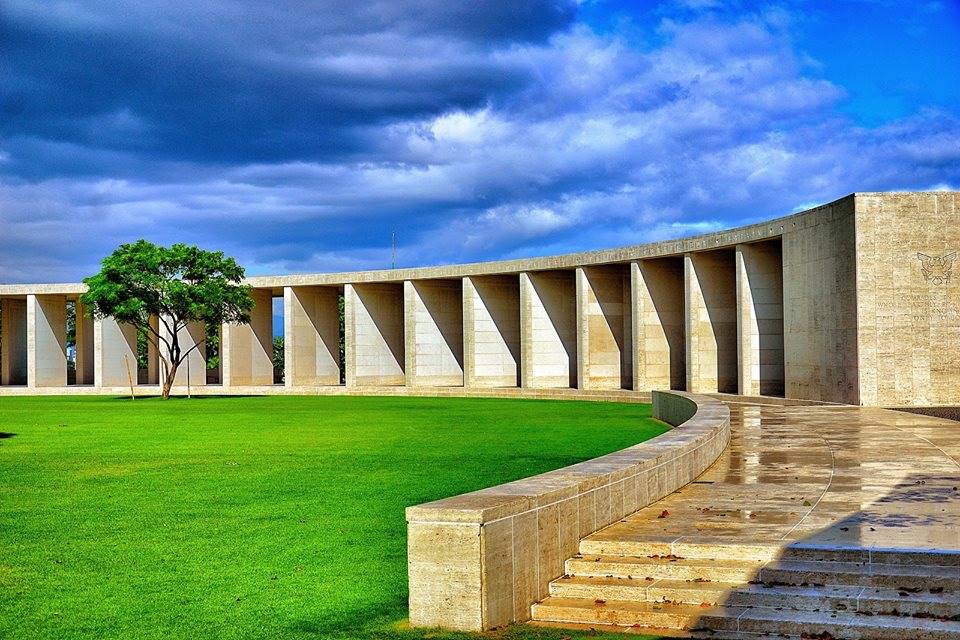
Shipfitter 2nd Class John P. Reitmeyer,
along with Gunners Mate 2nd Class Robert F. McCann, of Brookline are both
memorialized on the Tablets of the Missing at the Manila American Cemetery and Memorial, located in Fort Bonifacio, Taguig City,
Metro Manila. They were the first two local casualties of the World War that
would eventually claim forty-one sons from the neighborhood. Two other fallen
Brookliners, both lost at sea, Frank P. Dornetto and Clarence R. Copeland, are also listed on the Tablets of the
Missing in Manila.

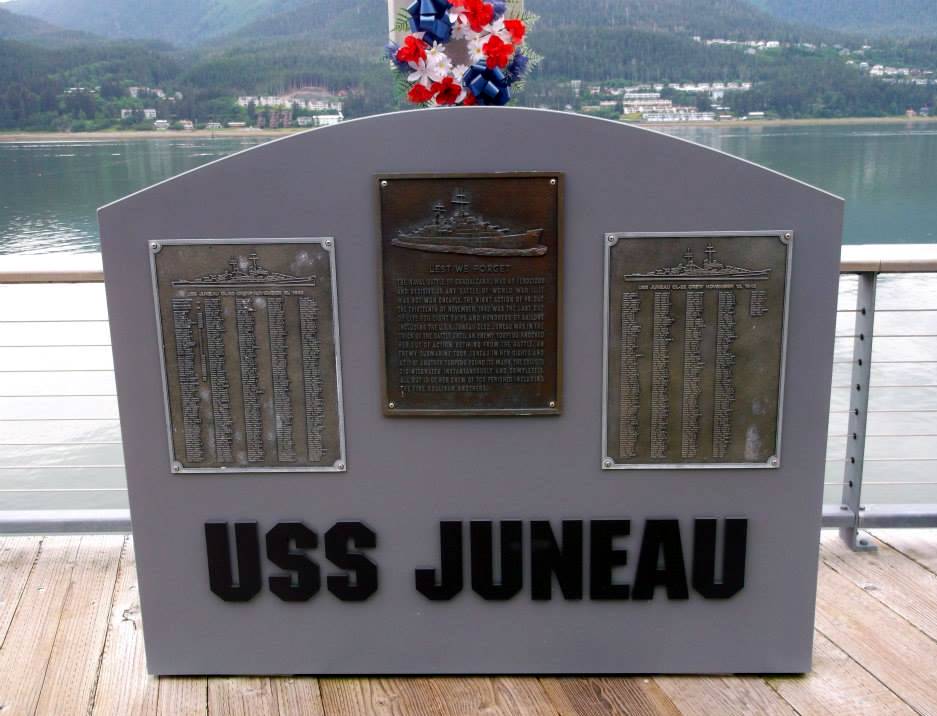
In 1987, a memorial to the USS Juneau
was erected near the docks in Juneau, Alaska. The bronze tablets were later
moved to the USS Juneau Memorial Center, located in Kearny, New Jersey, and
rededicated on November 14, 2013. The Memorial Center is in the old Federal
Shipbuilding Company, the same building that laid the keel for the ship back
in 1940.
On March 20, 2018, explorers located the
wreck of the USS Juneau 2.6 miles below the ocean surface off the Soloman
Islands. Click here to view video footage of the discovery.
NOTE: The Reitmeyer family has quite a
storied legacy of military tradition. It began with John Reitmeyer in 1929 and
has continued through three generations until today. Click here to
read about the amazing service record and sacrifice of this remarkable Brookline
family.
* Written by Clint Burton:
May 24, 2012 - Updated April 14, 2018 *
The Brookline
War Memorial

Listed below are
many of the sons of Brookline who gave their
lives to preserve freedom and contain aggression during
World War I, World War II, Korea and Vietnam.
“It is foolish and wrong to mourn the men who died.
Rather, we should thank God that such men lived.”
General George S. Patton

World War I
(1917-1919)

The World War I Memorial -
Washington D.C.
<> <>
<> <> <> <> <> <> <> <>
<> <> <> <> <> <> <> <>
<> <> <> <> <> <> <> <>
<> <> <> <> <> <>
World War II
(1941-1945)
|
Alm, William H.
Pioneer Avenue
Army
Details |
Arensberg, Roy T.
Fernhill Avenue
Army
Details |
|
Bracey, Bruce H.
Plainview Avenue
Army
Details |
Brickley, Edward G.
Woodward Avenue
Army
Details |
|
Capogreca, James J.
Merrick Avenue
Navy
Details |
Copeland, Clarence R.
Creedmoor Avenue
Navy
Details |
|
Cullison, Thomas J.
Birtley Avenue
Army
Details |
Dempsey, Howard F.
Berkshire Avenue
Army
Details |
|
Dempsey, Walter F.
Milan Avenue
Navy
Details |
Diegelman, Edward R. Jr
Norwich Avenue
Army
Details |
|
Dornetto, Frank P.
Jacob Street
Navy
Details |
Doyle, John F Jr.
Eben Street
Navy
Details |
|
Fagan, Gerald B.
Woodbourne Avenue
Army
Details |
Falk, Harold E.
Pioneer Avenue
Army
Details |
|
Fehring, Robert M.
Fernhill Avenue
Army
Details |
Gmuca, Joseph J.
Brookline Boulevard
Army
Details |
|
Heil, Robert F.
Bayridge Avenue
Army
Details |
Hynes, Richard E.
Waddington Avenue
Army
Details |
|
Kestler, Paul C.
Creedmoor Avenue
Navy
Details |
Ketters, Robert C.
Berkshire Avenue
Army
Details |
|
Mahoney, Michael J.
Oakridge Street
Army
Details |
Majestic, Arthur B.
Starkamp Avenue
Army
Details |
|
Mayberry, Alexander G.
Breining Street
Army
Details |
Mazza, John
Alwyn Street
Army
Details |
|
McCann, Robert F.
Edgebrook Avenue
Navy
Details |
McFarland, Hugh R.
McNeilly Road
Army
Details |
|
Meisner, Walter F.
Berwin Avenue
Merchant Marine
Details |
Miller, William J.
Norwich Avenue
Army
Details |
|
Napier, Edward J.
Brookline Boulevard
Army
Details |
Nicholson, John D.
Woodbourne Avenue
Army
Details |
|
O'Day, John R.
Creedmoor Avenue
Navy
Details |
Orient, Andrew D.
Fordham Avenue
Army
Details |
|
Pisiecki, Raymond A.
Wolford Avenue
Army
Details |
Reeves, Alfred M.
Brookline Boulevard
Army
Details |
|
Reitmeyer, John P.
Bellaire Avenue
Navy
Details |
Rhing, Vern M.
Norwich Avenue
Army
Details |
|
Ruane, Roy J.
Berkshire Avenue
USMC
Details |
Shannon, Harry C.
Midland Street
Army
Details |
|
Shannon, Jack E.
Midland Street
USMC
Details |
Simpson, James D.
Woodbourne Avenue
Army
Details |
|
Spack, Harry
Linial Avenue
Army
Details |
Tobin, Paul M.
Woodbourne Avenue
Army
Details |
|
Vierling, Howard F.
Fordham Avenue
Army
Details |
Wagner, Ralph G.
Shawhan Avenue
Army
Details |
|
Wentz, Walter L. Jr
Woodbourne Avenue
Army
Details |
Zeiler, Harold V.
West Liberty Avenue
Army
Details |

The World War II Memorial -
Washington D.C.
<> <>
<> <> <> <> <> <> <> <>
<> <> <> <> <> <> <> <>
<> <> <> <> <> <> <> <>
<> <> <> <> <> <>
Korean War
(1950-1953)

Korean War Memorial -
Washington D.C.
<> <>
<> <> <> <> <> <> <> <>
<> <> <> <> <> <> <> <>
<> <> <> <> <> <> <> <>
<> <> <> <> <> <>
Vietnam War
(1965-1973)

Vietnam War Memorial -
Washington D.C.
The Brookline
Monument - The Cannon

<Brookline
War Memorial> <> <Brookline
History> |