|

The Brookline Monument, better
known as "The Cannon," has been a mainstay on the boulevard
for many years, dating back to 1935. It is the showpiece of our local
Veterans Memorial,
or the Brookline Boulevard Triangle Park as it is officially
known on the city register.
* Last Modified: November 22, 2024 *

Community Gathering Place
The war memorial is located on the small
triangular shaped island situated between Brookline Boulevard, Queensboro and Chelton
Avenues. The cannon, a World War I artillery piece, honors the legacy of Brookline's
fighting men and women in arms as it quietly stands watch over the Commerical
District.
Situated at the heart of the community and often
simply referred to as "The Cannon," the tiny parklet has become a familiar gathering
place, either for an event or just to get together with friends. "We'll Meet at the
Cannon" is phrase familiar to anyone who has called Brookline home.

At the entrance to the park is a fine pink
granite Memorial Bench adorned with with three bronze memorial plaques. The one on
the rear of the bench, above the planter, is "In Memory of All American Veterans."
Another is placed on the lower part of the bench honoring "The Veterans of Brookline,"
our local military men and women that have served in the various conflicts from World
War I through the Persian Gulf War.
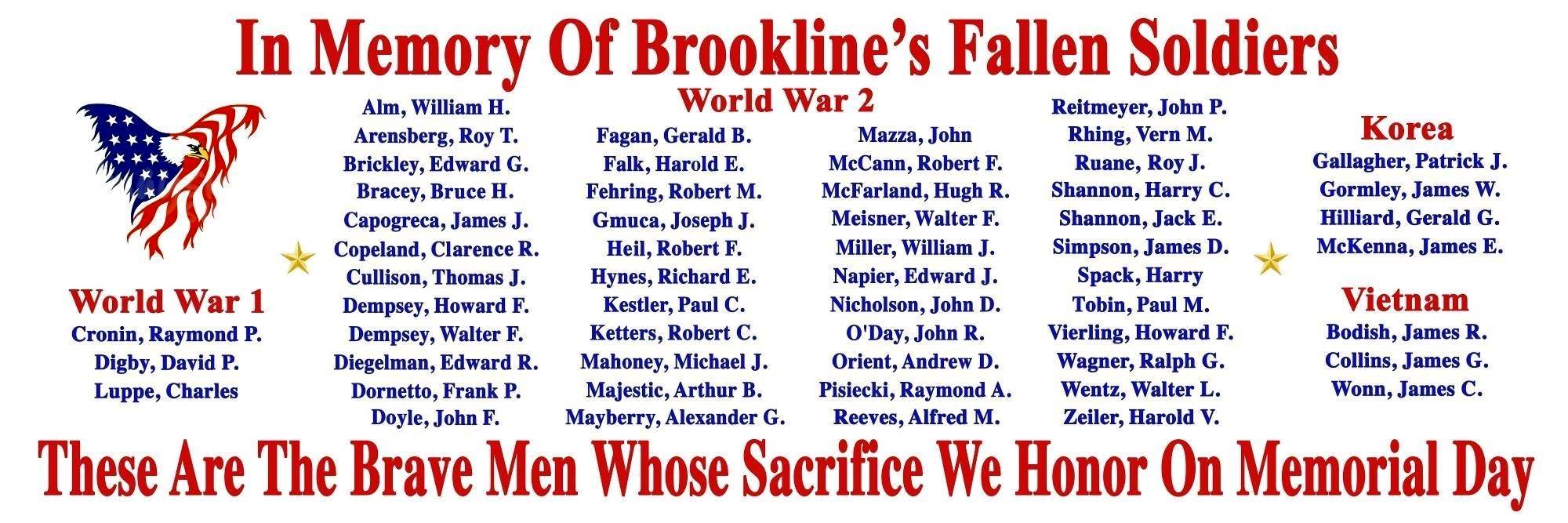
The most recent addition is the Brookline Honor Roll plaque, dedicated on August 31, 2019. Placed on the front of the bench, it honors
the fifty-six local soldiers, sailors, airmen and Marines that lost their lives
during the wars of the 20th Century. By the grace of God there have been no local
casualties since during the War on Terror in Iraq and Afghanistan.
 
The park contains a few other park benches, a
flag pole and a flower garden. Each year, the local Memorial Day Parade begins at the Veteran's Memorial. The parade is preceeded by a somber
ceremony in honor of those who fell in battle.
Many Brookline residents and casual
passers-by, however, are unaware of the true significance of this small park,
and the sacrifices made by Brookliners over the past century in the service of
our country. It is in their honor that this park exists, and it is our duty to
tell that tale on this webpage, thus keeping their stories, and memories,
alive in our hearts and minds.
Former Site of the Freehold Real Estate Office
In 1905, when the Brookline section of the
former West Liberty Borough was undergoing the transformation from a rural farming
district into a modern residential and commercial community, the Freehold Real
Estate Company established a small sales office on the triangle. The original
one-room wooden shack was replaced by a two-room brick building in 1912. The office
was a busy place for many years as the community grew.
 
The Freehold Real Estate office along Brookline
Boulevard in 1910 (left) and again in 1913.
As for ownership of the triangle,
Freehold owned the larger share of the property, and the City of Pittsburgh
owned the rest, located near the tip of the triangle that pointed in the
direction of the developing Brookline Boulevard Commercial district.
First Flag Raising and Memorial Plaque
On October 20, 1917, the Boy Scouts held
the first flag raising ceremony and in November 1919, a city ordinance was
enacted allowing the Brookline Board of Trade to place a bronze Memorial Tablet
"Commemorating the Achievements of Brookline World War Heroes." This was placed
on the city owned portion of the triangle.

Then, in 1932, as a result of the financial
crisis caused by the onset of the Great Depression, the Freehold Office in
Brookline was closed. Their land was sold to James McGaffin, a prominent
Brookline businessman and owner of the McGaffin Construction Company. The old
Freehold office was razed in the fall of 1933.
A Permanent Memorial
Despite the struggling economy, the 1930s
were a time of great change in Brookline. The Joint Civic Committee was busy
working on many initiatives to help modernize and improve the community. One
such project was to establish a larger Veteran's Memorial to honor Brookline
soldiers who fought in World War I.
On April 18, 1934, James McGaffin sold his
portion of the triangle to the city for the purpose of establishing a permanent
memorial. The cost of the transfer was $5750, and the land was designated as the
Brookline Boulevard Triangle Park.
On July 4, 1935, before the start of the
annual Independence Day Parade, members of Brookline's American Legion Post #540,
formed just two months prior to that in May 1935, dedicated a white marble Memorial
Bench. Bolted to the bench was the original bronze Memorial Tablet originally
dedicated in 1919.

Members of the local American Legion Post #540
dedicate the original white marble
Memorial Bench at the Brookline Boulevard Triangle Park on July 4,
1935.
Soon afterwards, The United States Department
of the Interior granted the American Legion Post #540 the loan of a government
surplus artillery piece to be placed on the triangle as another local monument
to Brookline Veteran's. It was placed on a concrete pad with the gun barrel
facing towards the Commercial District.
Other additions to the Veteran's Memorial
continued in the years that followed. On Memorial Day, 1937, the American Legion
Post #540 and the Brookline Americanism Committee, headed by Mary E. Laitta,
dedicated a flag pole.
In the spring of 1939, the Pittsburgh Department
of Public Works spent $1600 to build a retaining wall along the Chelton Avenue side of
the park to level the land, install additional concrete paving and metal fencing around
the memorial, as well as providing new landscaping and other improvements.
The Original Cannon (1935-1942)
The present-day Cannon is actually the
second rendition of the monument. The granite memorial bench itself is also
a replacement. The original cannon was a surplus World War I American field
artillery piece. It's official designation was 4.7 inch Gun M1906.

An American howitzer, the 4.7 inch Gun M1906,
is shown here on May 21, 1939
at the Brookline Veteran's Memorial in Triangle Park.
The original howitzer, dedicated in
1938, stood for four years, until another global conflict called it back into
service. This time, the cannon was not headed for the front lines in Europe.
It was, instead, heading to Jones and Laughlin Steel. The World War I artillery
piece was donated by the American Legion to the J&L Mill in Hazelwood to be melted
down during a scrap metal drive for World War II.

American Legion Post #540 members
stand by Brookline's original Cannon.
It happened on October 13, 1942,
when John Renner, a foreman at the J&L 16-inch roller, and George Winslow,
superintendent of the mill's Hazelwood polishing plant and senior
vice-commander of the Brookline Legion Post 540, held a small ceremony
before the 4.7 inch cannon was again carted off to war, this time against
the empire of Japan. The cannon was inscribed "To Japan via U.S. Armed
Forces."

Brookline's original Cannon being hauled
away for scrap metal on October 13, 1942.
Our Schneider Howitzer
After World War II, an Army surplus howitzer
was obtained on loan from the Department of the Interior as a replacement for the
original cannon. The current model 1917 Schneider 155mm howitzer was installed and the park re-dedicated in 1946. In the spring of 2021
Brookline residents celebrated seventy-five years with their now iconic
Schneider howitzer.

The Cannon is arguably the most recognizable
feature on Brookline Boulevard and has always been a favorite amongst decades of
youngsters who love to climb aboard and spin the wheels.
Although it still federal property and
belongs to the Department of the Interior, our Schneider howitzer is something
Brookliners have claimed as their own, as shown by the outpouring of concern
caused by the bus crash on July 8, 2017.

For decades, children have been fascinated
by the Cannon at the Veteran's Memorial.
Updates and Upgrades
The aging white marble Veteran's memorial
bench was replaced with the present-day polished pink granite bench in 1995. At
that time the old World War I bronze tablet was replaced with two new bronze
memorials, one to all American veterans, including references to the conflicts
from World War I to the Persian Gulf War, and another dedicated to local veterans
from the Brookline community.

The pink granite bench in 2000 with the bronze
veteran's plaques in the original configuration as installed in 1995.
The upper plaque was moved to the rear of the bench in 2019, replaced by a larger Brookline Honor Roll plaque.
Old Soldiers
Brookline's Veteran's Memorial Park has
always been popular gathering place. Several generations of
Brookliners have uttered the words, "I'll meet you at the cannon."
Sometimes the park benches are just a
nice place to sit down and enjoy a relaxing moment, either alone or with
friends.
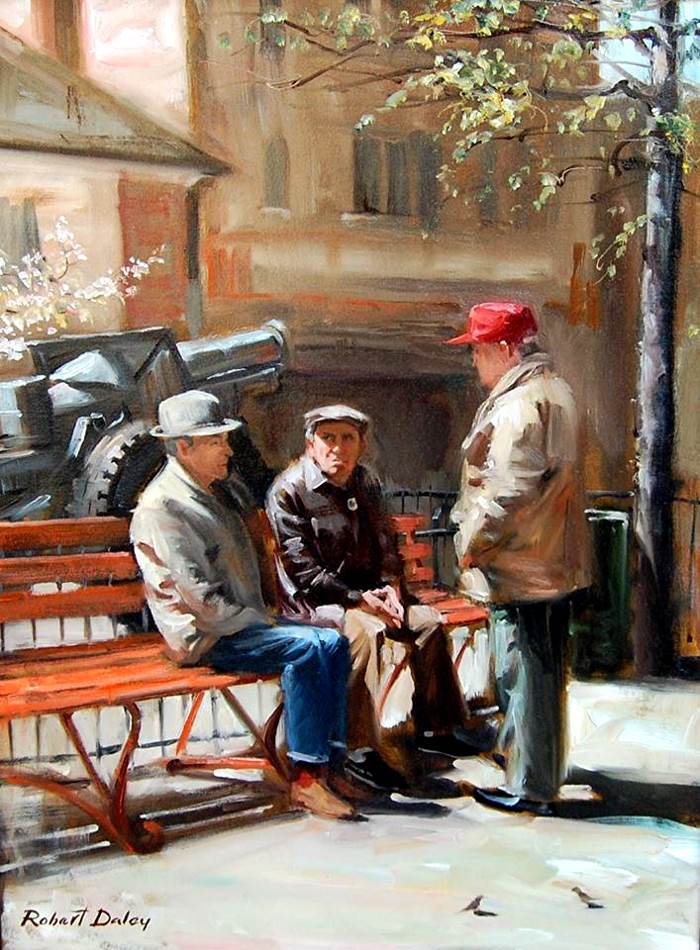
For the three gentlemen captured in
this Robert Daley print, entitled "Old Soldiers," this meeting at the park
was something of a casual reunion of Veteran's. On a crisp fall morning,
the old soldiers have gathered near the cannon to chat about the day's
events.
The average pedestrian would pass
them by without much thought, not realizing what sacrifices these brave
men had made so many years ago on the battlefields of far away places.
They had been to hell and back, an experience that only a veteran can
understand. They share a common bond, one that is
forged in the cauldron of war.
These fine men were part of our
Greatest Generation and oh, what stories they could tell.

Brookline's snow-covered cannon on
December 29, 2012.
South Hills Memorial Day Parade
Every Memorial Day, beginning in 1934,
the South Hills Memorial Day Parade Association hosts the annual Memorial Day Parade. The event begins at the Brookline Veterans Memorial with the opening
ceremony.
The parade then follows a 2.2 mile route
from the cannon along Brookline Boulevard, Pioneer Avenue and West Liberty Avenue.
The procession ends at Mount Lebanon Cemetery, where a closing ceremony is held.
The parade is a fun, yet somber event honoring local soldiers who gave their
lives in the service of our country.
 
Frank F. DeBor, the owner of DeBor Funeral
Home and Commander of the American Legion Post #540 lays a wreath
on the memorial bench in Triangle Park prior to the start of the 1954 Memorial
Day Parade.
At the Memorial Day Parade in 2010, I was struck by the fact that nobody could recite the names of
Brookline's fallen heroes, those whose sacrifice was being celebrated that
day.
My curiosity led me on fruitless searches
to the local American Legion, nearby VFW and the Brookline library. It seemed so
wrong that our proud community, unlike others like Beechview, Carrick, Dormont and
Mount Lebanon, had no record of the native sons that died in war.

Brookliners gather at the Veteran's Memorial
for the Memorial Day ceremony before the parade in May 1960.
With this in mind, Doug Brendel and myself
took it upon ourselves to research this topic and learn the names. We scoured the
casulty lists of old archived Pittsburgh Press, Pittsburgh Post-Gazette, Mount
Washington Times and Brookline Journal editions.
It took a few months, but in the end we had
identified the names of fifty-six Brookline natives who perished during the WWI,
WWII, Korean and Vietnam Wars.
 
Along with these fifty-six brave souls, we also
learned of many Brookliners who suffered wounds and many others who were held as
Prisoner of War. By the time of the Memorial Day Parade of 2018, it was with pride that we could present the names
listed below in the casualty section of
this webpage. These are the heroes celebrated on Memorial Day,
and may their sacrifices never be forgotten by the generations of Brookliners who live
under the blanket of freedom they helped to provide.
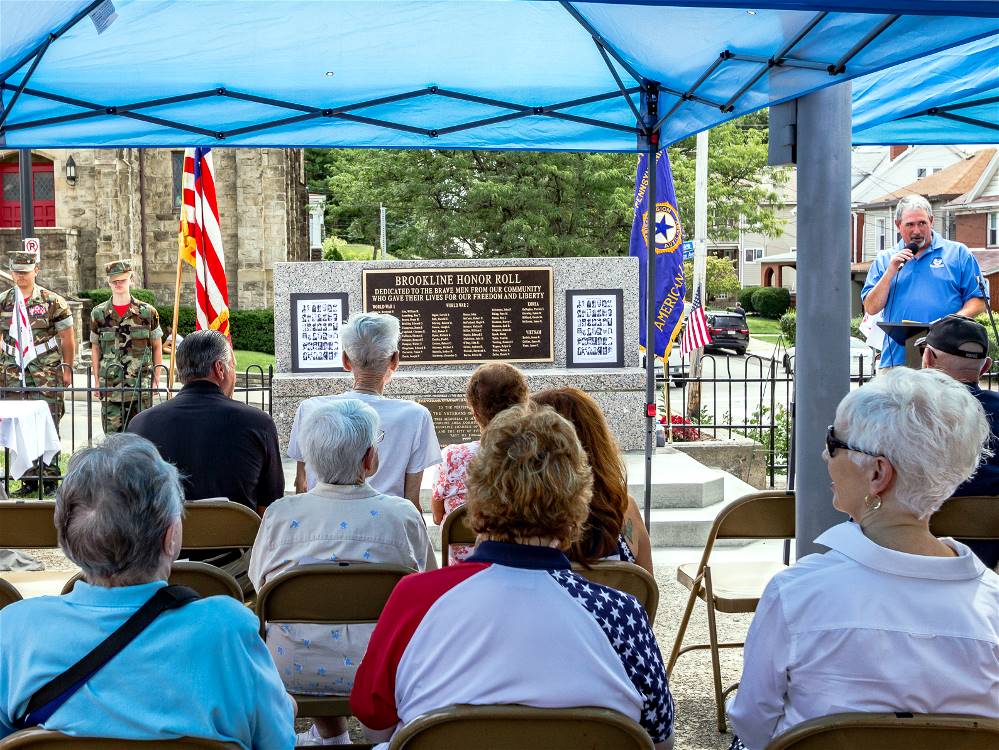
Dedication of Honor Roll Plaque - August 2019
At noon on Saturday, August 31, 2019, a
dedication was held at the Brookline Veteran's Park and War Memorial to dedicate a
beautiful bronze Honor Roll plaque listing the fifty-six soldiers, sailors, airmen
and Marines that lost their lives during the conflicts of the 20th Century (World War
I, World War II, Korea and Vietnam). The plaque was commissioned by Brookline
Historical Society members Clint Burton and Doug Brendel. The names of those
soldiers are listed on this page in the local casualty lists section.
Honor Roll Dedication Page with Recap and Over 150
Photos
Brookline Military Casualty Lists
♦ World War I ♦ ♦ World War II ♦ ♦ Korean War ♦
♦ Vietnam War ♦ ♦ War on Terror ♦
Listed below are
many of the sons of Brookline who gave their
lives to preserve freedom and contain aggression during
World War I, World War II, Korea and Vietnam.
“It is foolish and wrong to mourn the men who died.
Rather, we should thank God that such men lived.”
General George S. Patton
  

World War I
(1917-1919)
 History of Pittsburgh and Western PA
Soldiers in World War I History of Pittsburgh and Western PA
Soldiers in World War I
For a complete listing of
World War I fatalities:
Soldiers of the Great
War - Volume I
Soldiers of the Great
War - Volume II
Soldiers of the Great
War - Volume III
For a listing of
World War I fatalities from Pittsburgh:
Soldiers of the Great
War - Volume III

The World War I Memorial -
Washington D.C.
<> <>
<> <> <> <> <> <> <> <>
<> <> <> <> <> <> <> <>
<> <> <> <> <> <> <> <>
<> <> <> <> <> <>
World War II
(1941-1945)
|

Alm, William H.
Pioneer Avenue
Army
Details |

Arensberg, Roy T.
Fernhill Avenue
Army
Details |
|

Bracey, Bruce H.
Plainview Avenue
Army
Details |

Brickley, Edward G.
Woodward Avenue
Army
Details |
|
Capogreca, James J.
Merrick Avenue
Navy
Details |

Copeland, Clarence R.
Creedmoor Avenue
Navy
Details |
|

Cullison, Thomas J.
Birtley Avenue
Army
Details |
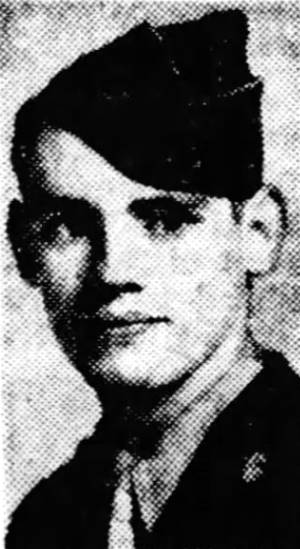
Dempsey, Howard F.
Berkshire Avenue
Army
Details |
|

Dempsey, Walter F.
Milan Avenue
Navy
Details |
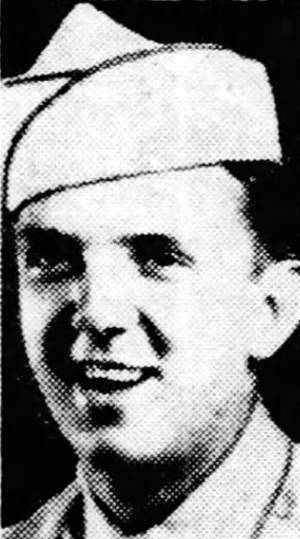
Diegelman, Edward R. Jr
Norwich Avenue
Army
Details |
|

Dornetto, Frank P.
Jacob Street
Navy
Details |
Doyle, John F. Jr.
Eben Street
Navy
Details |
|

Fagan, Gerald B.
Woodbourne Avenue
Army
Details |
Falk, Harold E.
Pioneer Avenue
Army
Details |
|
Fehring, Robert M.
Fernhill Avenue
Army
Details |

Gmuca, Joseph J.
Brookline Boulevard
Army
Details |
|

Heil, Robert F.
Bayridge Avenue
Army
Details |

Hynes, Richard E.
Waddington Avenue
Army
Details |
|
Kestler, Paul C.
Creedmoor Avenue
Navy
Details |

Ketters, Robert C.
Berkshire Avenue
Army
Details |
|

Mahoney, Michael J.
Oakridge Street
Army
Details |
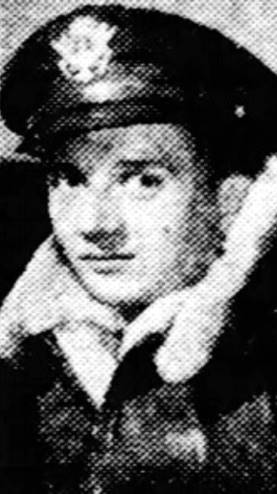
Majestic, Arthur B.
Starkamp Avenue
Army
Details |
|

Mayberry, Alexander G.
Breining Street
Army
Details |

Mazza, John
Alwyn Street
Army
Details |
|
McCann, Robert F.
Edgebrook Avenue
Navy
Details |

McFarland, Hugh R.
McNeilly Road
Army
Details |
|
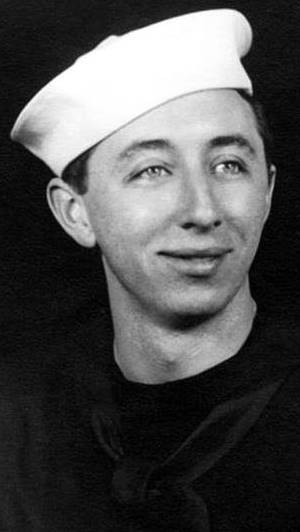
Meisner, Walter F.
Berwin Avenue
Merchant Marine
Details |
Miller, William J.
Norwich Avenue
Army
Details |
|
Napier, Edward J.
Brookline Boulevard
Army
Details |

Nicholson, John D.
Woodbourne Avenue
Army
Details |
|

O'Day, John R.
Creedmoor Avenue
Navy
Details |

Orient, Andrew D.
Fordham Avenue
Army
Details |
|

Pisiecki, Raymond A.
Wolford Avenue
Army
Details |

Reeves, Alfred M.
Brookline Boulevard
Army
Details |
|
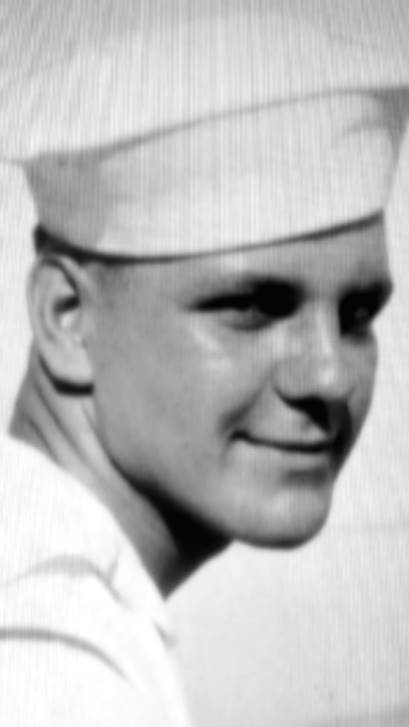
Reitmeyer, John P.
Bellaire Avenue
Navy
Details |

Rhing, Vern M.
Norwich Avenue
Army
Details |
|

Ruane, Roy J.
Berkshire Avenue
USMC
Details |

Shannon, Harry C.
Midland Street
Army
Details |
|
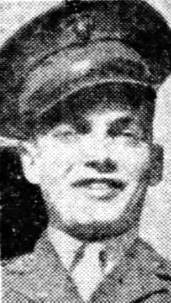
Shannon, Jack E.
Midland Street
USMC
Details |
Simpson, James D.
Woodbourne Avenue
Army
Details |
|

Spack, Harry
Linial Avenue
Army
Details |
Tobin, Paul M.
Woodbourne Avenue
Army
Details |
|
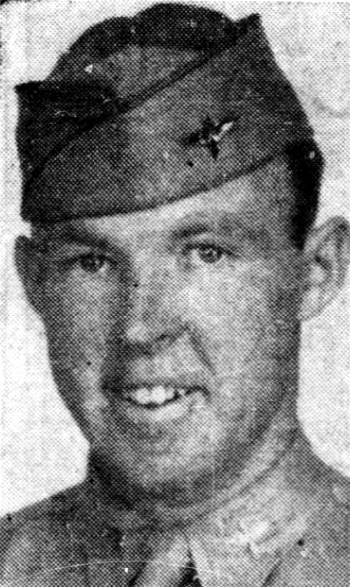
Vierling, Howard F.
Fordham Avenue
Army
Details |
Wagner, Ralph G.
Shawhan Avenue
Army
Details |
|

Wentz, Walter L. Jr
Woodbourne Avenue
Army
Details |
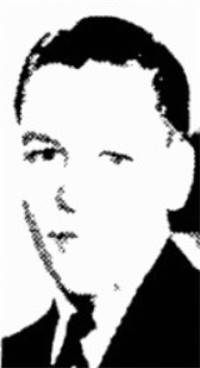
Zeiler, Harold V.
West Liberty Avenue
Army
Details |
For a listing of
World War II fatalities from Pennsylvania:
The National Archives
Army and Army Air
Corps
Navy, Marine Corps
and Coast Guard

The World War II Memorial -
Washington D.C.
<> <>
<> <> <> <> <> <> <> <>
<> <> <> <> <> <> <> <>
<> <> <> <> <> <> <> <>
<> <> <> <> <> <>
Korean War
(1950-1953)
For a detailed listing of all
Korean War fatalities from Pennsylvania:
The Korean War Project

Korean War Memorial -
Washington D.C.
<> <>
<> <> <> <> <> <> <> <>
<> <> <> <> <> <> <> <>
<> <> <> <> <> <> <> <>
<> <> <> <> <> <>
Vietnam War
(1965-1973)
For a listing of all
Vietnam War fatalities from Allegheny County:
Pennsylvania Geneology Trails

Vietnam War Memorial -
Washington D.C.
<> <>
<> <> <> <> <> <> <> <>
<> <> <> <> <> <> <> <>
<> <> <> <> <> <> <> <>
<> <> <> <> <> <>
The War on Terror (2001-2021)
There have been no
fallen Brookline soldiers in the Persian Gulf War (1991),
the War in Iraq (2003-2011), or the War in Afghansitan
(2001-2021).
Pittsburgh Casualties in The War on
Terror
For a complete, sortable listing
of Coalition fatalities in the War on Terror:
Operation Iraqi
Freedom Operation Enduring
Freedom

United States Army soldiers
resupplying in the mountains of Afghanistan.
<> <>
<> <> <> <> <> <> <> <>
<> <> <> <> <> <> <> <>
<> <> <> <> <> <> <> <>
<> <> <> <> <> <>
Editor's Note: These casualty lists
were compiled from archived issues of the Pittsburgh Press and Post-Gazette
(March, 1917 - March, 1919), the Mount Washington Times (December 1941
- July 1946), the Pittsburgh Press and Pittsburgh Post-Gazette (December 1941
- July 1946), the Brookline Journal (1950-1954) and the Carnegie Library
and ancestry.com online resources. All names listed have been verified as
casualties through the National Archives (Army and Navy) or the Defense
POW/Missing Persons Office online resources. The home of record is listed as
the address of the soldier's next-of-kin.
As for our World War I and World War
II research, we've made every attempt to be as accurate and thorough as
possible. These daily published lists were the only consistant resource available
for the Army and Navy's World War I and World War II records containing street
addresses. Hence, it is possible that we may have omitted names that should be
present on this record. It is also possible that Brookline natives who moved to
another city or state may not be identified as being from Pennsylvania, therefore
not recorded here. We really did do our best to get this right.
A Work In Progress
This page is an ongoing
project. Our research will continue on this casualty list. Our goal is to
present the most accurate account possible of Brookline's fallen servicemen
with the admiration, respect and honor befitting their sacrifice.
Special thanks to
Doug Brendel, Michael Brendel, John Rudiak, Carol Anthony, David Wonn,
John Turanin, Rosario Scumaci for their research assistance.

The National Cemetery in Minneapolis,
Minnesota on a June morning.
Photo from the Minneapolis Star/Tribune - 2012.
Additional World
War II Information
Our research into World War II
casualty lists also uncovered several postings regarding local soldiers
that were wounded, missing or held as prisoners. The following is a recap
of information regarding Brookline veterans wounded in action, missing in
action, or held as prisoner of war. This is not to be considered a complete
accounting. These names were culled from the Pittsburgh Press and Pittsburgh
Post-Gazette. Our research is ongoing ...
Wounded:
Aaron Paul S Jr - Starkamp Street,
Bauer Richard A - Berkshire Avenue,
Bishop William R - Rossmore Avenue,
Bogart Larry - Breining Street,
Bower Richard A - Creedmoor Avenue,
Brown James R - Jacob Street,
Brunk Carl A - Pioneer Avenue,
Carrigan Joseph W - Brookline Boulevard,
Copeland William M - Creedmoor Avenue,
Cunningham Edward J - Brookline Boulevard,
Czech George B - Bellaire Place,
Dudics George Jr - Fernhill Avenue,
Dunbar Frank - Woodward Avenue,
Dunn Robert K - Woodbourne Avenue,
Dye Charles L - Fordham Avenue,
Elstner Francis L - Rossmore Avenue,
Frediani Lawrence F - Merrick Avenue,
Frew Jack R - Wedgemere Avenue,
Gorski John F - Pioneer Avenue,
Green Elmer D - Lynnbrooke Avenue,
Gregg Paul - Saw Mill Run Boulevard,
Hagel Robert L - Gallion Avenue,
Haggerty Francis L - Chelton Avenue,
Heck Richard N - Bayridge Avenue,
Henry Robert P - Plainview Avenue,
Herrle James J - Kenilworth Street,
Hogan James T - Bellaire Place,
Hogel Joseph A - Milan Avenue,
Klaus Francis - Hobson Street,
Kuntz William J - Brookline Boulevard,
Land, William - Berkshire Avenue,
Lang Charles H - Whited Street,
Lutton James L - Brookline Boulevard,
Mahoney David R - Berkshire Avenue,
McKelvey Gene B - Bellaire Avenue,
Moses William A - Fordham Avenue,
Orth William J - Bayridge Avenue,
Oswant John E - LaMarido Street,
Quallich Robert P - Fortuna Street,
Ruane Timothy F - Berkshire Avenue,
Streicher Frederick E - Bellaire Place,
Schilling Thomas M - Rossmore Avenue,
Smith Harry A - Berkshire Avenue,
Stull John R - Sageman Avenue,
Sturm Jesse J - Edgebrook Avenue,
Thom Albert - Timberland Avenue,
Tobin, Paul M - Woodbourne Avenue,
Trimble Arthur P - Bayridge Avenue,
Troppman Daniel A - Chelton Avenue,
Weber George - Norwich Avenue,
Whetsell John W - Castlegate Avenue,
Ziegler Maurice S - Woodbourne Avenue.
Missing:
Benninger Robert J - Woodbourne Avenue,
Brickley Edward G - Woodward Avenue,
Burkley Joseph A - Whited Street,
Kost William C - Linial Avenue,
Linke Walter A - Ferncliff Avenue.
Prisoner of War (Germany):
Butterworth Norman - Norwich Avenue,
Courtney Samuel E - Greencrest Drive,
Drexler Daniel T - Bellaire Avenue,
Dudics Edward - Fernhill Avenue,
Fluke Richard C - Woodbourne Avenue,
Flynn William J - Woodbourne Avenue,
Jordano Frank A - Fernhill Avenue,
Kosinski Raymond J - Woodward Avenue,
Kost Peter - Linial Avenue,
Manners Christ D - Brookline Boulevard,
Streicher Frederick E - Bellaire Place,
Theis Richard C - Fordham Avenue,
Trunzo Anthony F - Plainview Avenue,
Walker Raymond L - Plainview Avenue,
Watkins David A - Fordham Avenue,
Welsh Richard J - Merrick Avenue.
Prisoner of War (Japan):
Arcuri Louis - Bellaire Place.
NOTE: None of the soldiers listed
above as Missing-In-Action have been found on military death rolls. All
of the Prisoners-Of-War listed above were repatriated.
Source - www.ancestry.com.
Additional World
War I Information
Wounded:
Boecking Guido C - Brookline Boulevard,
Hamilton A W - Plainview Avenue,
Knowlson Roscoe T - Berkshire Avenue,
Steffy, John L - Brookline Boulevard.
Prisoner of War (Germany):
Sheridan James L - Fordham Avenue.
<> <>
<> <> <> <> <> <> <> <>
<> <> <> <> <> <> <> <>
<> <> <> <> <> <> <> <>
<> <> <> <> <> <>

A soldier of the Old Guard stands
watch over the Tomb of the Unknown Soldier.
Photo taken during Hurricane Sandy - October 2012.
Brookline Veteran's Remembrances
<><><><> <><><><>
<><><><> <><><><>
<><><><> <><><><>

Related Links
♦ The Saga of the World War I Bonus Army ♦
and the War Bonus Bonds - June 1936
♦ USS Jenks (DE-665) - September 1943 ♦
The First Destroyer Built in Pittsburgh
♦ LST-512 in Pittsburgh - October 1945 ♦
Great Lakes War Bond Drive
♦ Dedication of the Brookline Honor Roll ♦
Plaque - August 31, 2019

Memories from Pittsburgh Newspapers

<><><><> <><><><>
<><><><> <><><><>
<><><><> <><><><>
<><><><> <><><><>
<><><><> <><><><>
<><><><> <><><><>
Local Cavalry Officers

This clipping appeared in the
January 19, 1941
Pittsburgh Sun-Telegraph.
<><><><> <><><><>
<><><><> <><><><>
<><><><> <><><><>
<><><><> <><><><>
<><><><> <><><><>
<><><><> <><><><>
Seeing-Eye Dogs To Help In Blackout

This photo appeared in the
June 25, 1942 Pittsburgh Sun-Telegraph.
The caption read:
PATROL - William Kelley, of 1449 Bellaire
Place, and his seeing-eye dog "Pete". Kelley has organized a "Seeing-Eye Dog
Air Raid Precaution Patrol," composed of seeing-eye dogs and their blind
masters. Members will carry messages when autos, telephones are out of
commission.
<><><><> <><><><>
<><><><> <><><><>
<><><><> <><><><>
<><><><> <><><><>
<><><><> <><><><>
<><><><> <><><><>
Brookline Children Run Scrap Shop

This photo appeared in the
July 21, 1942 Pittsburgh Sun-Telegraph.
The caption read:
SCRAP - A swap shop to help collect scrap
is operated in Brookline. Built by Abe Goldstein in the rear of his house at
1410 Wareman Avenue, it's run by his daughter, Janet, 11. Seen above, Dick
Bradshaw, 3, and brother, Jim, 4, turn in scrap to the young business woman.
Left to right are Janet Goldstein, Ellen Lowther, Bernadette Legler and Lois
Lowther.
<><><><> <><><><>
<><><><> <><><><>
<><><><> <><><><>
<><><><> <><><><>
<><><><> <><><><>
<><><><> <><><><>


This photo
appeared in the October 1, 1942 Pittsburgh Post-Gazette.
The caption, along with the accompanying article, read as follows:
Action on the home front, in the energetic
Junior Commandos organization, is what these 126 freshman and sophomore girls at
Elizabeth Seton High School in Brookline are prepared to further. Sworn in as
Junior Commando privates under J. L. Boyle, colonel of the Brookline area, they will
help in organizing JC units and serve as aides in the scrap collections.
Two Thousand, Two Hundred Junior Commandos
dedicated a new "scrap corner" in Brookline on Tuesday evening with a jamboree that
would vie with any football "pep" meeting you ever saw.
The the tune of "The Old Gray Mare," the
army of boys and girls sane these words:
"The Stars and Stripes will fly over Tokyo,
fly over Tokyo, fly over Tokyo." They repeated "fly over Tokyo" in time with their
marching. The route of the parade led through neighborhood streets to the new
scrap depot at Brookline Boulevard and Merrick Street.
Commando-In-Chief Frank Murray and Colonel
John L. Boyle, Brookline district "commander," led the column with brisk step and
pride in the thousands of Junior Commandos who were helping to "fly the Stars and
Stripes over Tokyo."
The parade ended at the scrap corner which,
incidentally, was offered for the purpose by a Brookline businessman, Serafino
Gigliotti. Chief Murray than spoke to the boys and girls about the importance of
continued effort in gathering scrap metal.

"I am very well pleased with the splendid
manner in which all of you First Class Privates, Corporals and Sergeants are
turning in scrap. Remember, boys and girls, it is the scrap that makes the
equipment which is necessary to win the war. Keep up the good work; but make sure
you ask permission before taking scrap from any property.
"Also keep in mind that a Commando must be
polite and courteous, and above all, must perform his or her job in a quiet
manner.
All Junior Commandos who have reported
collections of 200 pounds of scrap metal or more have been invited by mail to
see the Pittsburgh Steelers wallop the New York Giants at Forbes Field on
Sunday, October fourth. The squads of those who reported collections will also
receive tickets - all for free!
Two Brookline Junior Commandos, along
with their squads, have collected over a whopping 9400 pounds each. James
McKenna and Herbert Swann will join 45 other commandos from around the city
in ceremoniously having their names engraved on a 30-ton tank that will one
day be trundling after the enemies of our country.
NOTE: James McKenna, an army Silver Star recipient, lost his life in the Korean War.
His story is featured as part of this Brookline War Memorial.

This photo
appeared in the November 11, 1942 Pittsburgh Post-Gazette.
The caption read:
Young members of the Brookline School
Junior Commandos gave their "V" for Victory salute, as army and navy chiefs
launched them on a new scrap "Jamboree" last night to bring in all the metal
missed by other drives. "We can't get in the war but we can get in the scrap,"
is the kids' motto. Shown with the youngsters are, left to right, Joseph F.
Moore, president of Brookline Savings and Trust Company and former Brookline
School principal; Commando Colonet John L. Boyle; Chief Petty Officer E. T.
Tissue of the navy recruiting office; Lieutenant E. B. Kecker, U.S.N.R., and
Captain William W. Carroll, commander of army military police in Pittsburgh.
Girls of Elizabeth Seton High School were usherettes.

This photo
appeared in the March 8, 1943 Pittsburgh Post-Gazette.
The caption read:
Credited with having been responsible
for the sale of the most War Bonds during a recent drive in the Elizabeth
Seton High School, Barbara Bassett, 14, of 1028 Bellaire Avenue, received
the title of "Miss Victory" at a dance in the school on Friday afternoon.
Of the nearly $10,000 worth of bonds pledged and sold by Commandos of the
school, Miss Bassett's effort accounted for $4,500 worth. In the above picture,
Robert Strakam a guest at the dance and president of the Federation of Catholic
High School students, plus a "corsage" of war stamps on Barbara's
shoulder.
<><><><> <><><><>
<><><><> <><><><>
<><><><> <><><><>
<><><><> <><><><>
<><><><> <><><><>
<><><><> <><><><>
West Liberty School Bell Scrapped

This photo appeared in the
October 2, 1942 Pittsburgh Post-Gazette.
The caption read:
This picture shows the original West
Liberty School Bell, which had been summoning West Liberty children to class
for seventy-five years. The bell was donated to the war effort, as well as
the five tons of debris behind Miss Mary Jan Bartolotto of 222 Capitol
Avenue. Altogether, the children of West Liberty School collected nearly
seventy-five tons of scrap metal, all of which was transported and dumped in
the courtyard of the County Courthouse.
NOTE: This was just the beginning. All
of Brookline's schools took part in the home front effort to defeat the Axis
during World War II, participating in Defense Stamp Drives, Scrap Metal Drives,
Victory Gardens and Rationing.
<><><><> <><><><>
<><><><> <><><><>
<><><><> <><><><>
<><><><> <><><><>
<><><><> <><><><>
<><><><> <><><><>
American Rangers and Rangerettes

This photo appeared in the
October 7, 1942 Pittsburgh Press.
The caption read:
AMERICAN RANGERS AND RANGERETTES of the
Press Seck Hawkins Club in the Brookline District brought scrap metal and rubber to
the huge Brookline Business Men's Association bin on Brookline Boulevard. Later
in the day the boys and girls were guests of Manager Jimmy Laux at
the Boulevard Theater. Director-Secretary Barbara Blakely of 961 Fordham Avenue, district
leader, is shown at the right. Seck Hawkins chapters everywhere are out to bring
in thousands of tons of scrap metal and rubber to help Uncle Sam.
<><><><> <><><><>
<><><><> <><><><>
<><><><> <><><><>
<><><><> <><><><>
<><><><> <><><><>
<><><><> <><><><>
Joining The Army

This photo appeared in the
October 25, 1942 Pittsburgh Press.
The caption read:
JOINING THE ARMY were these five young men
who have been "pals" for years. All nineteen-years old, the youths enlisted
yesterday in the Army Air Forces as ground-crew mechanics and hope to be assigned
to the same unit. Left to right, they are (front row) Charles Dimmock, 3038
Pinehurst Avenue, Dormont; Paul Bosted, 3215 Gaylord Avenue, Dormont; John
McCahan, 2401 Woodward Avenue, Brookline; (back row) Robert Dobbins, 3120 Wainbell
Avenue, Dormont, and Eugene Malarkey, 1214 Biltmore Avenue, Dormont.
<><><><> <><><><>
<><><><> <><><><>
<><><><> <><><><>
<><><><> <><><><>
<><><><> <><><><>
<><><><> <><><><>
Name of Brookline Girl on Bomb Hurled on Tokyo

This article appeared in the
April 23, 1943 Pittsburgh Press.
Click on image for a larger, readable version.
Miss Peggy Fry, of 704 Brookline Boulevard,
had her name chalked onto the nose of a bomb destined for Tokyo during the
Doolittle Raid. "This one from Peggy", was the message written by her
fiancee, Marine Corporal Larry Bogart, of 1450 Breining Street, who was serving as orderly
to Captain Mark Mitscher on the aircraft carrier U.S.S. Hornet during the
legendary B-25 bombing mission.
<><><><> <><><><>
<><><><> <><><><>
<><><><> <><><><>
<><><><> <><><><>
<><><><> <><><><>
<><><><> <><><><>
Sold Themselves a New Hat

This photo appeared in the
May 6, 1943 Pittsburgh Post-Gazette.
The caption read:
As salesladies in a downtown department
store, Myrtle D. Bradford, 21, left, of Oakdale, and Anna Garforth, 22, of
2350 Birtley Avenue, Brookline, have tried many a hat on customers, but
yesterday they tried on a pair of WAAC bonnets and found them a neat fit.
The needs of the Women's Army Auxiliary Corps and the chance to wear the
hats as often as they liked made the girls give up their jobs selling hats
and join the WAACS. They will leave soon for basic training.
<><><><> <><><><>
<><><><> <><><><>
<><><><> <><><><>
<><><><> <><><><>
<><><><> <><><><>
<><><><> <><><><>
Hula Comes To Brookline

This photo appeared in the
August 21, 1943 Pittsburgh Post-Gazette.
The caption read:
Miss Evelyn Hunzikes, left, and her
sister-in-law, Mrs. Francis Hunzikes, right, of 725 Bayridge Avenue, Brookline,
aren't certain the dance they're doing is the genuine hula, but they know their
grass skirts and shell necklaces are the real thing. They received the costumes
yesterday from Sergeant William Hunzikes, their brother and husband, respectively,
who is in the South Pacific area, with an Army air-craft unit.
<><><><> <><><><>
<><><><> <><><><>
<><><><> <><><><>
<><><><> <><><><>
<><><><> <><><><>
<><><><> <><><><>
Her First Chance To Say Thanks
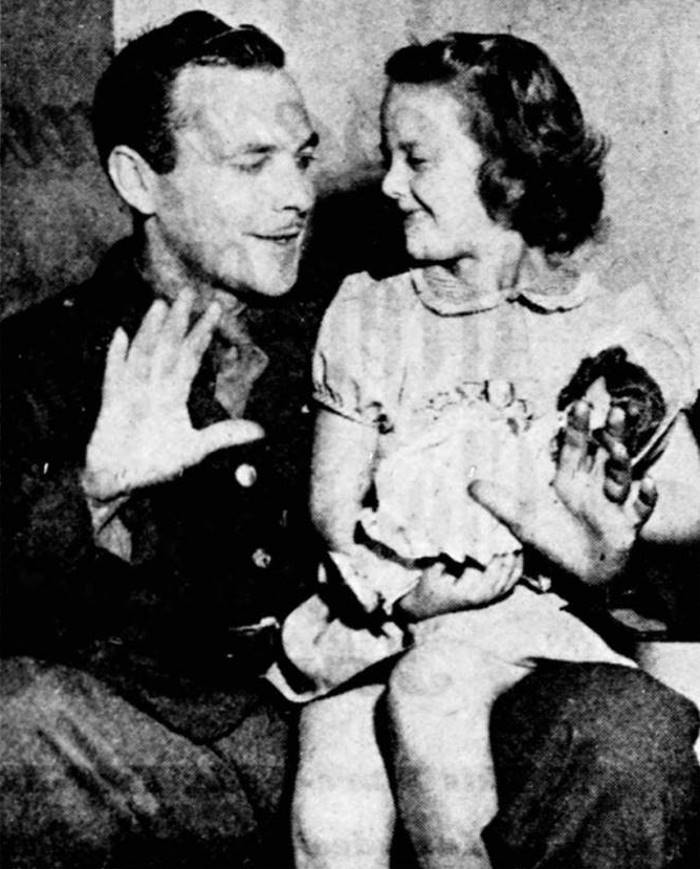
This photo appeared in the
December 27, 1943 Pittsburgh Post-Gazette.
The caption read:
Five year-old Patty McGibbeny of 905 Excelsior
Street is taking her first opportunity to thank personally her godfather, Sergeant
John Edward Conlin of the army engineers, for the grass skirt he sent her last
summer from Guadalcanal. Sergeant Collins, formerly of Brentwood, was overseas
since May, 1942. Passing through Pittsburgh, he visited Patty's grandparents,
Mr. and Mrs. Jason P. Ferns, of 510 Kathleen Street.
Note: Patty's family moved to Brookline in
1953 and settled on Bellaire Place in Brookline. She married Gerald Burton of Castle
Shannon in 1960. The couple bought a home on Bellaire Place in 1963 and remained
for fifty-one years. Patty McGibbeny is my mother.
<><><><> <><><><>
<><><><> <><><><>
<><><><> <><><><>
<><><><> <><><><>
<><><><> <><><><>
<><><><> <><><><>
Navy Airman Enjoys Belated Christmas
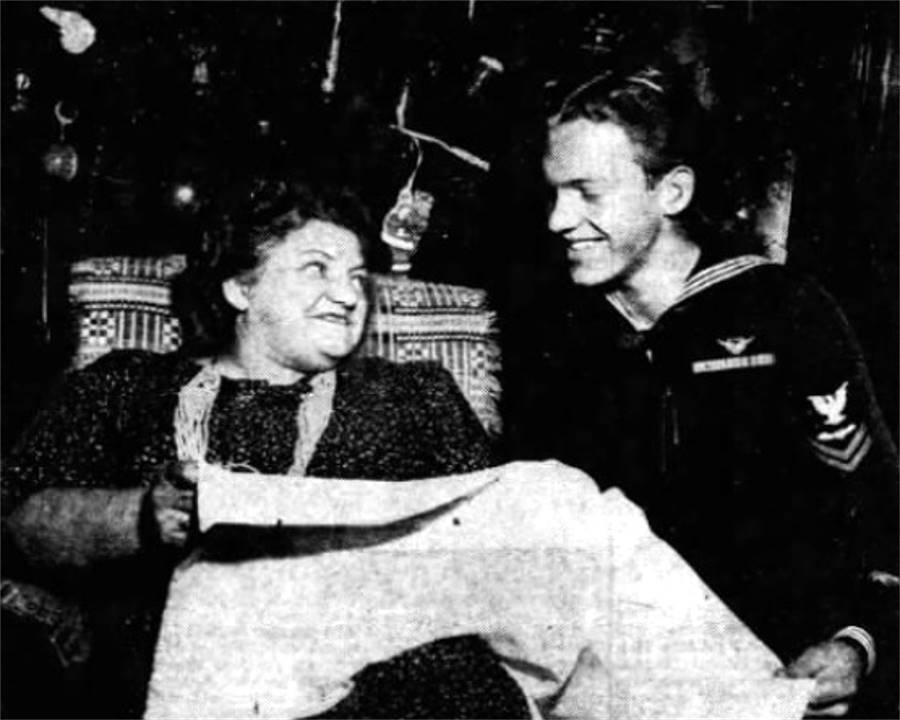
This photo appeared in the
February 7, 1944 Pittsburgh Post-Gazette.
The caption read:
Although he was afloat on a life raft in
the South Pacific for about twelve hours on Christmas Day after his plane was shot
down by Japanese fighters, Aviation Radioman Second Class Kenneth C. Sherborn, 18,
recaptured the thrills of Christmas in his home at 1434 Woodbourne Avenue,
Brookline, yesterday. He is shown examining a gift scarf with his mother, Mrs.
Christian R. Sherborn, beneath the branches of the family Christmas tree, decorated
especially for him.
<><><><> <><><><>
<><><><> <><><><>
<><><><> <><><><>
<><><><> <><><><>
<><><><> <><><><>
<><><><> <><><><>
Joining The Air-WAC

This photo appeared in the
April 13, 1944 Pittsburgh Press.
The caption read:
Mrs. Virginia E. Moore, left, of Aliquippa
and Mary M. Boyle, 533 Brookline Boulevard, departed last night for Fort Oglethorpe,
Georgia. Mrs. Moore husband, Captain Joseph H. Moore, Army Air Forces, recently was
rescued from a raft after being shot down over the Pacific. She is assigned to the
Air-Wac.
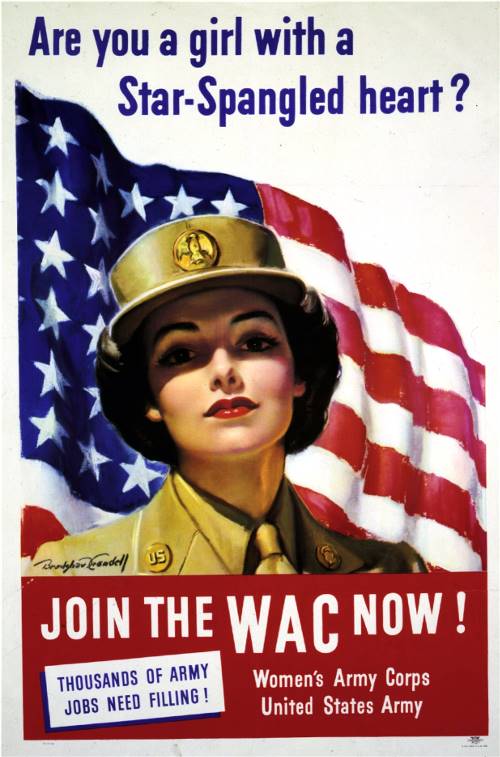
Note: Both of these women were joining the
Women's Army Corp. Some women, like Mrs. Moore were assigned as Air-WACs, working
directly with the Army Air Corps, while Brookline's Mrs. Boyle was a WAC. The WAC
were originally trained in three major specialties, switchboard operators, mechanics
and bakers. This was later expanded to dozens of specialties like Postal Clerk, Driver,
Stenographer, and Clerk-Typist. WAC armorers maintained and repaired small arms and
heavy weapons that they were not allowed to use. Over 150,000 women served in the
Women's Army Corp, with 32,000 in the Air-WAC.
<><><><> <><><><>
<><><><> <><><><>
<><><><> <><><><>
<><><><> <><><><>
<><><><> <><><><>
<><><><> <><><><>
Admiral Nimitz Didn't Fail Her

This photo appeared in the
May 21, 1944 Pittsburgh Press.
The caption read:
Martha Hufnagel wrote and told Admiral
Chester W. Nimitz she had scrapbooks filled with news clippings of current events
in the South Pacific, and was reserving the first page for him. He sent her a
letter and an autographed photo of himself. Martha, 15, of 1406 Creedmoor Avenue,
Brookline, began collecting the clippings after her brother, Lieutenant (JG)
Charles T. Hufnagel, went to the South Pacific.
<><><><> <><><><>
<><><><> <><><><>
<><><><> <><><><>
<><><><> <><><><>
<><><><> <><><><>
<><><><> <><><><>
"Remember That Pub in England, Son?"

This photo appeared in the
September 9, 1945 Pittsburgh Post-Gazette.
The caption read:
This is the first beer this father-and-son
soldier team has had together since they were both in Salisbury, England. Private
First Class William Cotton, 24, left, was transferred to the continent first. His
dad, Technician Fourth Grade Vince Cotton, honorably discharged a month ago, now
works in the city register of wills office and lives at the Hotel Henry. His son,
who lives with his wife, Doris, at 1314 Bellaire Place, Brookline, just returned
after sixteen months overseas.
<><><><> <><><><>
<><><><> <><><><>
<><><><> <><><><>
<><><><> <><><><>
<><><><> <><><><>
<><><><> <><><><>
Girl Scout Troop #77 - Brookline's Female Sharpshooters
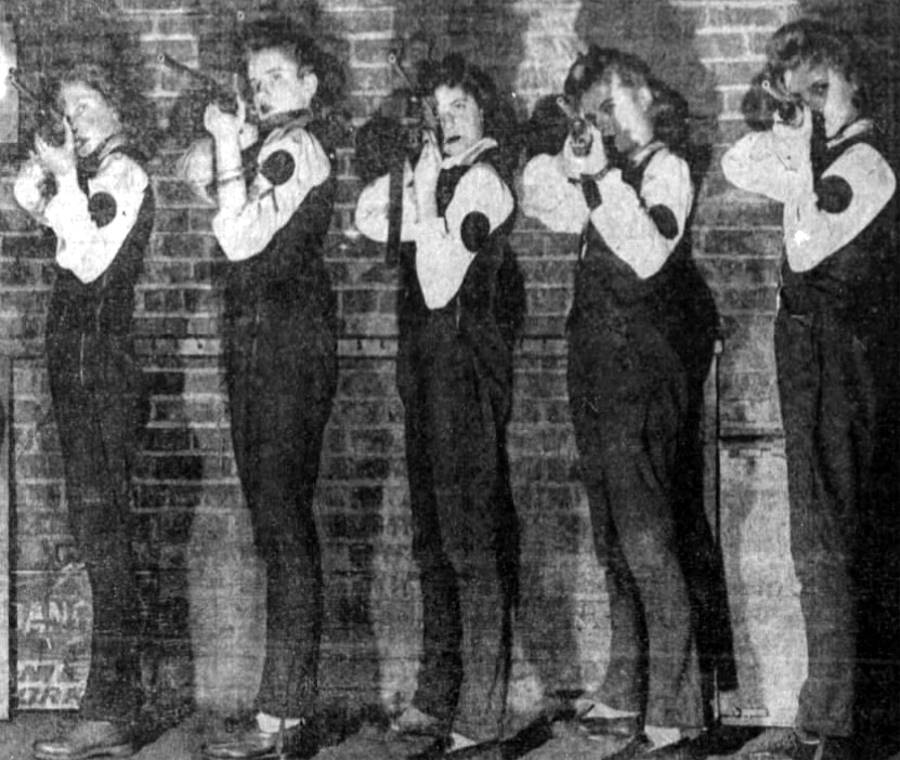
A photo from the February 1, 1942 Sun-Telegraph
showing Girl Scout Troop#77 sharpshooters Patsy Jean Moss,
Team Captain Jane Linder, Marilyn Galvin, Rosemary Shenkel and Patsy
Shenkel.
Brookline's Girl Scout Troop#77 was formed
in 1940 and hosted by the Episcopal Church of the Advent, located on Pioneer Avenue.
The scout leader was Mrs. Florence Galvin and the troop consisted of twenty girls
ages 12 through 18. Other assistant leaders were Mrs. Edna Shenkel and Mrs. Lucille
Pfeiffer.
Along with the many diverse scouting related
activities in which the troop participated, including camping trips to South Park,
the girls also formed a sharpshooting team that participated in the American Legion
Junior Rifle League. The rifle program was sponsored by the American Legion and
approved by both the National Rifle Association and the United States War Department,
which provided rifles and ammunition.
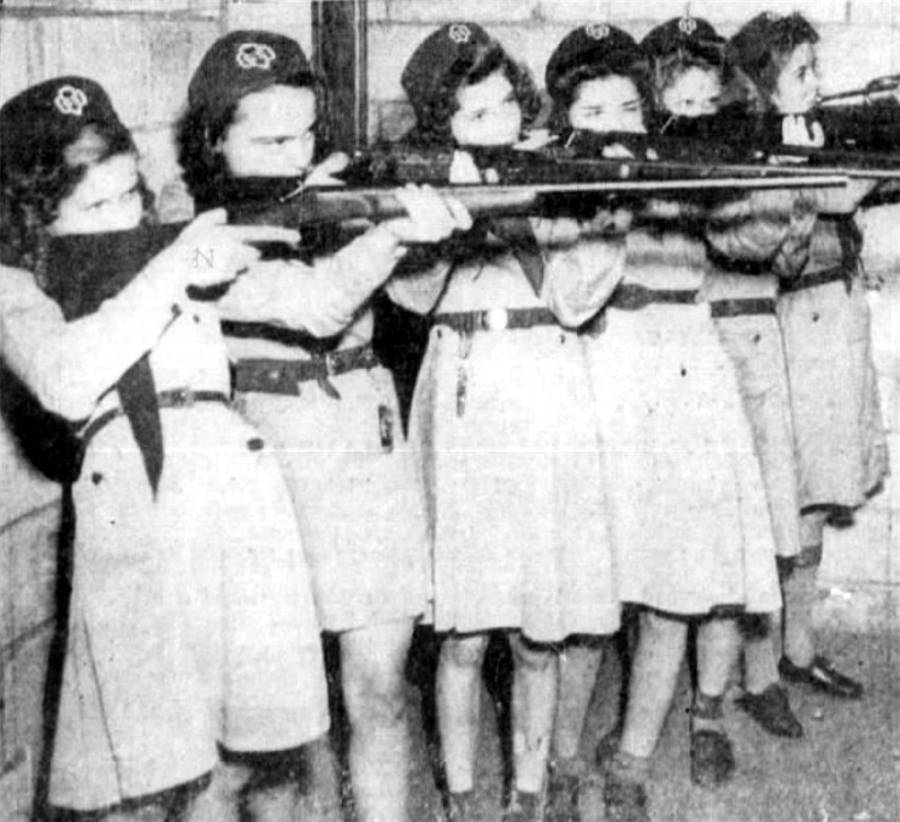
This December 31, 1940 Sun-Telegraph photo shows
Troop #77 sharpshooters at the American Legion Hall. Shown here are
Virginia Linder, Barbara Blakely, Marilyn Galvin, Wilma Masters, Virginia Morrell
and Rosemary Shenkel.
Known as "Brookline's Annie Oakleys," and
trained by Edward Wilhelm, the rifle team from Troop#77 compiled a remarkable record
of achievement, consistently finished among the top sharpshooters in the Pittsburgh
area, and were recognized for their talents by the National Rifle Association. The
girls trained once a week at the No. 1 Police Station shooting range.

In this December 21, 1941 Pittsburgh Sun-Telegraph
photo Rosemary and Patsy Shenkel receive
National Rifle Association medals from Troop #77 Scout Leader Mrs. Florence
Galvin.
The Brookline girls were also very active
during the war years holding benefit dances to raise money for special charities
such as the American Red Cross, Salvation Army and the March of Dimes. The ladies
would knit and sew for the Red Cross and make holiday favors for the Veteran's
Hospital. All of the girls were instructed in Red Cross home nursing and first
aid.
One of their most successful projects was
preparing gift packages for servicemen that were distributed at the USO lounge on
Grant Street in downtown Pittsburgh. Each package contained three postal cards,
three candy bars, cigarettes and chewing gum. The troop received many appreciative
letters from soldiers who received these packages.
One of those letters read:
"I am a soldier in the Air Corps. I just
arrived in Chicago from my home in Nutley, New Jersey, where I ahve been on a
ten-day furlough. On my way home my train stopped in Pittsburgh for an hour, and
I stopped at the USO there. I was given a package made up by you. I am dropping this
letter to thank you for this swell gift. It made a soldier very happy, because I
had no money to buy anything, and was glad to get the candy and cigarettes. Keep
up your good work, and thank you girls. Signed - Private A. S.

The girls of Troop #77 march in the 1942 Memorial Day
Parade along Brookline
Boulevard.
<><><><> <><><><>
<><><><> <><><><>
<><><><> <><><><>
<><><><> <><><><>
<><><><> <><><><>
<><><><> <><><><>
Honoring Their Heroes

John and Carol Ann Daum.
During and after the war years,
military-style oufits were a popular fashion in children's clothing. The
entire country mobilized for the war effort. Defense Stamp drives and scrap
collections made children feel as though they were doing their part to help,
and a feeling of patriotism swelled among the nation's youth. Wearing a
outfit fashioned to look like the men and women they looked up to was a
natural expression of that pride.
In this photo from 1946, John Edward
and Carol Ann Daum are shown wearing naval uniforms fashioned by their
grandmother, Viola Jane Daum, from their father's old uniform. Albert Daum,
a decorated veteran who was awarded the Purple Heart, served in the Navy
SeaBees during the campaign in the South Pacific. The children wore their
special outfits with pride in a classic example of Norman Rockwell's vision
of Americana.
John Daum went on to serve in the United
States Navy as a submariner. This photo was contributed by Scott Price, son of
Carol Ann Daum. Scott's grandfather, Harry R. Price, also served in the Navy
SeaBees during World War II.
<><><><> <><><><>
<><><><> <><><><>
<><><><> <><><><>
<><><><> <><><><>
<><><><> <><><><>
<><><><> <><><><>
Shortages at Home

Pittsburgh Post-Gazette article published
on December 30, 1945.
Rationing - Defense Drives - Service Stars
Rationing During World War II
Immediately following America's entry
into World War II, a rationing system was begun to guarantee minimum amounts
of necessities to everyone and prevent inflation. Tires were the first item
to be rationed, in January 1942, because supplies of natural rubber were
interrupted. Gasoline rationing proved an even better way to allocate scarce
rubber.
On October 28, 1942, the government
instituted a national speed limit of 35 mph. This was an effort to both
lessen fuel consumption and increase safety. Most Americans were allotted
a mere three gallons of gas per week and, due to rubber shortages, most
vehicles were driving on old, worn tires.
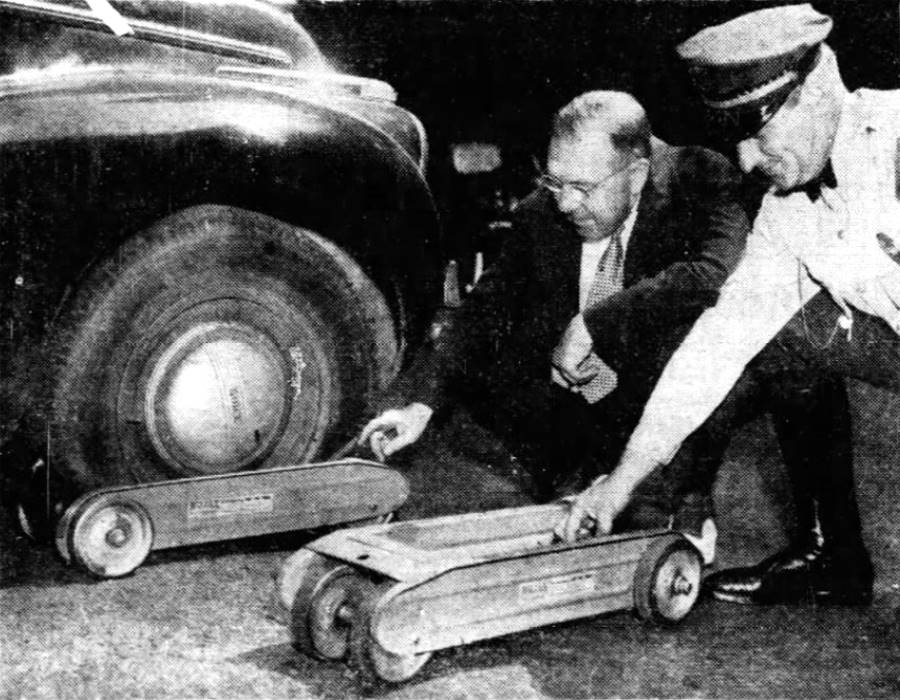
Property and Supplies Director Harry
Aufderheide and Police Sergeant Ernest Andrew
are shown testing one of the new "jack on wheels" on August 26,
1943.
The problem with bad tires became such
that creative measures had to be employed to deal with the frequency of flat
tires and the ensuing traffic delays caused by stranded vehicles. It became
a near necessity that these valuable tires be saved.
For instance, here in Pittsburgh, by 1943
an average of three vehicles a day were getting flat tires while driving through
the Liberty Tunnels. In
response, "jacks-on-wheels" were developed. A flat tire was lowered into a
wheeled cradle and the car could be driven out of the tunnel without doing
further damage to the tire.

By 1943, consumers needed government issued
ration coupons to purchase typewriters, sugar, gasoline, bicycles, footwear,
fuel oil, silk, nylon, coffee, stoves, shoes, meat, cheese, butter, margarine,
canned foods, dried fruits, jam, and many other items. Some items, like new
automobiles and appliances, were no longer in production as U.S. factories
turned completely to wartime production. The rationing system did not apply
to second-hand goods, like clothing and used cars.
To get a classification and a book of
rationing stamps, one had to appear before a local rationing board. Each person
in a household received a ration book, including babies and children. When
purchasing gasoline, a driver had to present a gas card along with a ration book
and cash. Ration stamps were valid only for a set period to prevent
hoarding.


Families kept a close eye in their
ration booklets as they could not be replaced. When in need of a new pair
of shoes or a dress, parents would carefully collect the requisite number
of red or blue tokens and then redeem them, along with cash, for the
requested merchandise.
Here in Brookline, families tightened
their purse-strings and did their best to make do with less. The public
transportation network became a prefered method of travel, and car-pooling
became commonplace. Most homes grew Victory Gardens to help offset the
shortage of foodstuffs. Parents learned how to mend worn clothing and
repair broken appliances.

One thing that sticks out in most
people's mind from the war years is a white vegetable substance, called
Oleo Margarine, that became a common butter substitute. Many said that
it did not taste like butter at all, and had the look and consistency of
lard. In an effort to make the margarine look more palatable, there was a
capsule of yellow dye inside each package. The capsule was broken and the
dye kneaded into the oleo, making it look more like butter. The effort
provided some relief, but most kids still considered it quite gross.
<><><><> <><><><>
<><><><> <><><><>
<><><><> <><><><>
<><><><> <><><><>
<><><><> <><><><>
<><><><> <><><><>
War Bonds and Defense Stamps

Another thing that was commonplace
during the years 1942-1946 was War Bond Drives. In order to finance the
war effort, the United States government sold savings bonds. Because of
rationing, families often had more money than they could spend, so they
saved it, mostly by investing in these government bonds.
War Bond rallies were held in most
cities and communities, often featuring Hollywood film stars and war heroes
to help draw the crowds needed to make the program a success. The bond buyer
paid 75% of the face value of the bond, and received the full face value when
redeemed after a set number of years.

These uniformed pledge girls took orders for
War Bonds and Defense Stamps at a bond rally held in Brookline Memorial
Park on July 20, 1942. Left to right are Florence Bergman, Dorothy Williams,
Connie Adam and Martha Jane Tawney.
The rally was held by the Brookline Business Men's Association. This photo
appeared in the Pittsburgh Sun-Telegraph.
There were seven major War Bond
drives, including the Great Lakes War Bond Drive in 1945. Pittsburgh was
one of the stops along the way for LST-512, a D-Day landing craft that toured
the Great Lakes waterways. The vessel, loaded with war exhibits, was moored
along the Monongahela Wharf on October 17, 1945.

May, 1942 - Defense stamp drive at
Brookline School.
Scrap metal drives and the sale of Defense
Stamps were another option for the government to raise capital with the help of
the general public. Stamp drives were a great way to get the nation's school
children involved in the homefront war effort. All public, private and parochial
schools participated in the Defense Stamp drives. Locally, among Pittsburgh Public
Schools, Brookline Elementary was the top seller of defense stamps in 1942.

While the Little Kids spent their
time selling defense stamps, collecting scrap metal, drawing patriotic
posters in school and learning how to distinguish between American, German and
Japanese fighter planes and bombers, the Bigger Kids joined the military and
were sent overseas to fight the war.
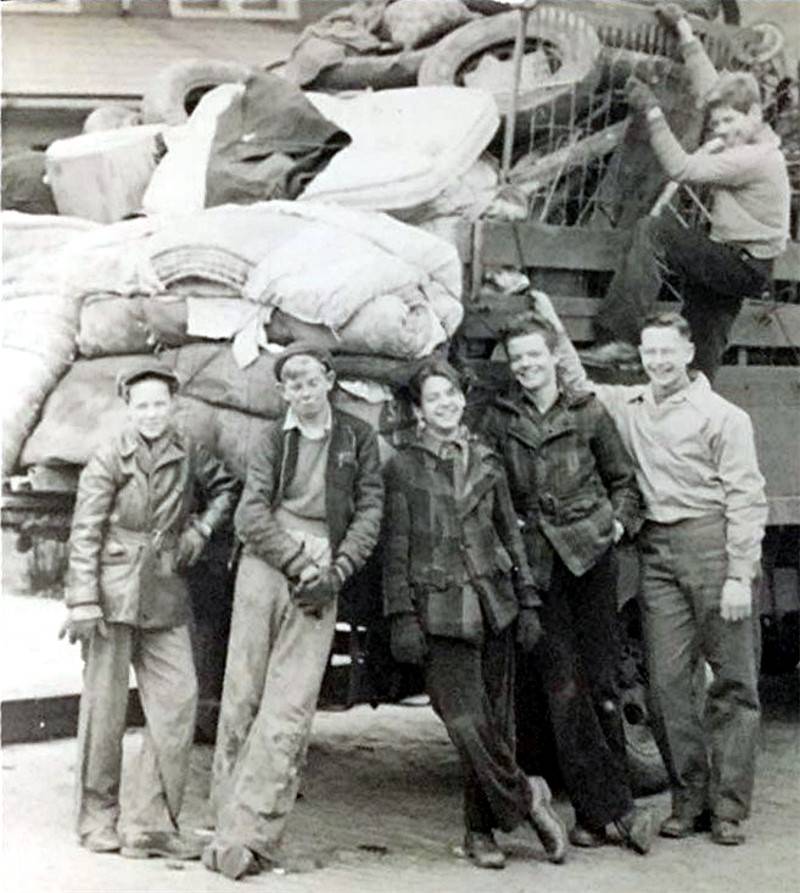
The Stengel brothers, James Gillespie and
other members of James Cowan's Boy Scout Troop collecting
scrap goods and other items for the war effort along Norwich Avenue in
1945.
Pittsburgh Press newspaper carriers, also
called Press Junior Merchants, also sold war stamps along their routes. The
Pittsburgh Press highlighted a Brookline boy, Robert E. Templeton, son of Mr.
and Mrs. R.J. Templeton, on January 28, 1944, as one of the leading carriers in
the sale of war stamps.
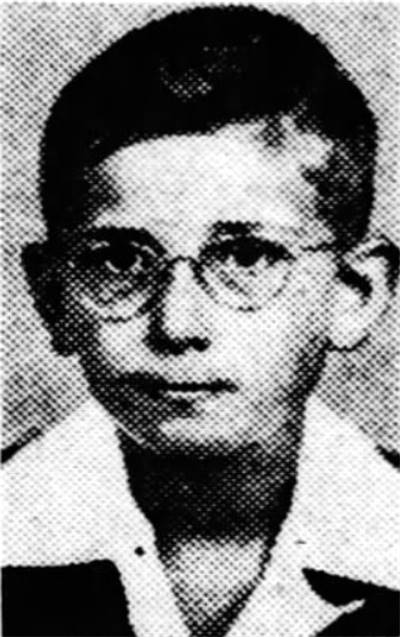
Robert E. Templeton
Templeton, a student at West Liberty School,
delivered along Lamarido Street, Fernhill Avenue and Pioneer Avenue. Up to that
date, he had sold 38,965 War Stamps to subscribers along his route, fourth highest
among all Press carriers.
Besides being a newspaper carrier, Robert
did odd jobs for neighbors and customers. With the money he earned, he bought War
Stamps and clothing. At school, arithmetic was his favorite subject and he had
ambitions of becoming an Aeronautical Engineer. As hobbies he built model
airplanes and played the trumpet. Football was his favorite sport.
<><><><> <><><><>
<><><><> <><><><>
<><><><> <><><><>
<><><><> <><><><>
<><><><> <><><><>
<><><><> <><><><>
Service Banners and Stars

As the war raged, here in Brookline, as
in all other Pittsburgh neighborhoods, blue service stars began to appear in many
of the neighborhood windows. On a growing number of these red banners, gold stars
replaced the blue. By 1945, it seemed as though there were one or more stars
displayed on every home in the city.
Service flags hung from windows were a
a proud symbol that one of more members of that household were actively serving
in uniform during the war effort. These banners were adorned with a blue star
for each member serving in a branch of the armed forces of the United States of
America. A gold star represented a family member that had fallen in the
line of duty.
PTSD and The Military
Post Traumatic Stress Disorder is something
that affects many of our veterans who have served in combat or other
hostile environments. For anyone interested in learning more about PTSD and some
avenues to seek assistance, check the following links:
Understanding A Veteran With PTSD
Guide to VA Mental Health Services for Veterans and
Families

American Legion Post
#540
World War II Honor Roll


The 4.7 inch M1906
The original cannon that was on
display at the Brookline Veteran's Memorial was officially known as
a 4.7 inch Gun M1906. The gun was produced between 1906 and 1919.
Of the 960 guns ordered, only 209 were produced. Some of these saw action
during the 1916 Mexican Border Campaign and in France during
World War I.
Not many of the guns have survived
the test of time. Three of these are still on display here in Allegheny
County. There are two standing in South Park at the intersection of Corrigan
Drive and Brownsville Road. One other is on display in North
Park.

An American 4.7 inch Gun M1906 was chosen
to be the first cannon displayed at Brookline's Veteran's Memorial.
 
The two 4.7 inch M1906 guns on display
in South Park at the corner of Corrigan Drive and Brownsville Road.

An American 4.7 inch Gun M1906
being fired in Texas during the 1916 Mexican Border Campaign.

The 155mm Schneider Howitzer
The Cannon on display at the
Brookline Veteran's Memorial is officially known as a Canon de 155 C modele 1917
Schneider. The 155mm
heavy field howitzers were made in France and used by the Allies in World
War I. The weapons remained in the U.S. arsenal for many years as training
guns. These howitzers also saw action in World War II, used by France, Finland,
Poland, Germany, Italy, Spain and Yugoslavia.
 
The 155mm Schneider howitzer was one of
the most common field guns used by the Americans in World War 1.
 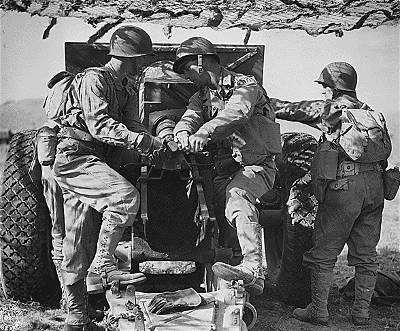
Left - An American battery equipped
with 155mm Schneiders at Varennes in the Argonne, 1918;
Right - Live fire training by the 4th Infantry Division
at Camp Carson, 1943.
 
Left - 155mm Schneiders after WWI
in 1919; Right - U.S. artillery training in 1940.
The Brookline
Monument - The Cannon - 1982
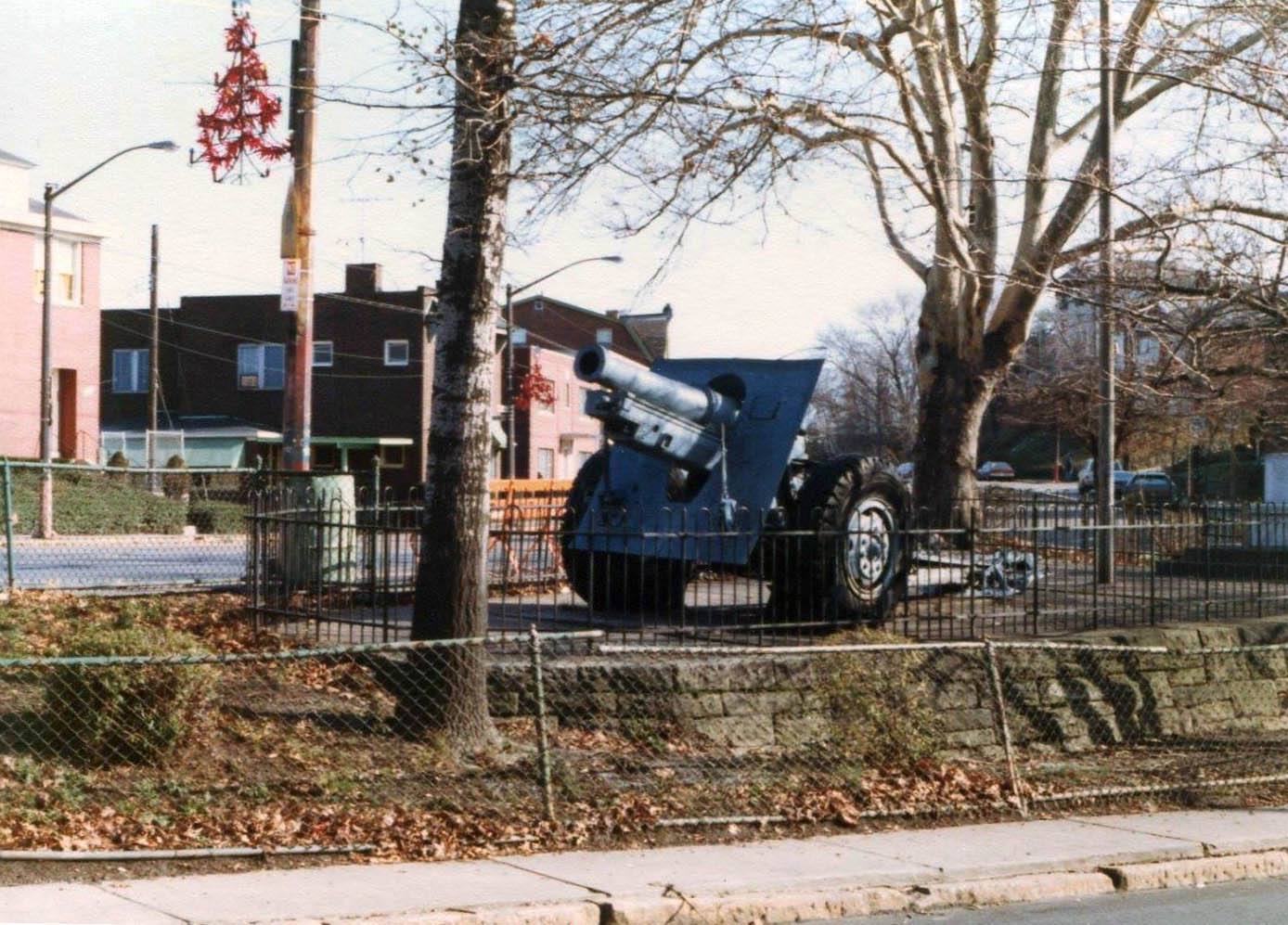
 

The Brookline
Monument - The Cannon - 2013

The Brookline Cannon stands
silhouetted against a colorful sky in the Spring of 2013.
Dan McKeever - The Caretaker - April 2014
On April 27, 2014, new flags were installed
at the Brookline Veteran's Park. The flags were hung by American Legion Post #540
members Joe Nellis and Dan McKeever, who for
the past several years acts as volunteer caretaker of the memorial. McKeever, a U.S.
Navy Vietnam Veteran, secured the POW/MIA flag, emblazened with the words "Gone But
Not Forgotten," solely with the profits from aluminum can recycling.
 
Joe Nellis and Dan McKeever were instrumental
in getting new flags for the Veteran's Memorial Park.
Brookline has always been supportive of our
proud veterans, who have served our country over the years with dedication and
devotion. Our community also honors the memory of our young men who gave the ultimate
sacrifice in times of war, and supports the ongoing efforts of veterans organizations
to account for those soldiers who remain listed as Missing in Action.

Under A Fresh Coat Of Snow
- January 2015

Bus Crashes Into Veteran's Memorial - July 2017
On July 8, 2017, the calm summer morning
was interrupted with the sudden crash of an out-of-control Port Authority bus
as it slammed into the Brookline Veteran's Memorial. The bus didn't just wreck
into the memorial, it drove right through it, then went over the embankment and
smashed into the wall and railing across the street on Chelton Avenue.
The bus had made its' usual left turn
off of Queensboro Avenue and then lost control. It continued into a full U-turn,
collided with two parked cars then barreled through the memorial, hitting the
100-year old Cannon and dragging it along until coming to a complete
stop.
By the grace of God, no one was in the
normally busy park at the time, and there were no serious injuries to report
among the passengers on the bus. When the wild ride ended, it appeared that
the bus actually faired worse than the vintage French-built howitzer, which
sustained only minor damage.
 
It was a chaotic scene as the bus smashed
through the small park and came to rest on Chelton Street.
 
The Cannon's tow hook and recoil brace got
lodged in the bus' window frame and was pulled along.

The park fence and benches were mangled
by the out-of-control vehicle as it smashed it's way through.
 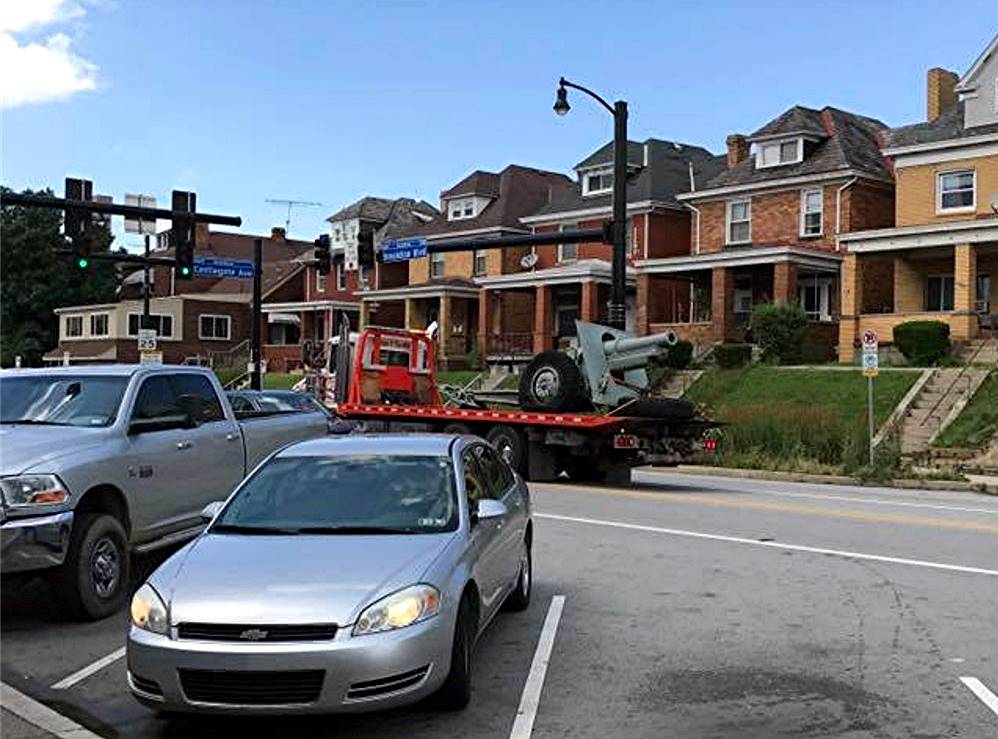
McGann and Chester were called to remove
the cannon and bus and take them to a Port Authority repair facility.
In addition to the cannon, other damage
in the park included a couple crushed benches and a fence which was mangled
and torn from its' foundation. Once police and paramedics cleared the area
and the chaos died down, a crew from McGann and Chester loaded the wounded
cannon onto a flatbed and delivered it to the Port Authority garage, where
repairs could be made.
It took a while to negotiate the
bureaucratic red tape to determine how to proceed with the cannon repairs.
Still the property of the Department of the Interior, special care had to
be taken during its' restoration to meet their strict guidelines and
procedures.
By October, the Port Authority had made
good on it's promise to repair the iconic Brookline landmark, and on the fifth
of that month, a PAT maintenance crew returned the cannon to the Veteran's
Memorial and placed it back on it's concrete pad. The Pittsburgh Department of
Public Works had already repaired the benches and fencing.
To the astonishment of Brookline residents,
the cannon looked brand new. The restoration went much better than expected.
Years of rust, weathering and neglect were repaired. New tires were installed
and the howitzer was painted in traditional Army green. For all intents and purposes
it looked brand new!
It is amazing how some things work out. For
several years a coalition of concerned veterans and citizens had been trying to
get the cannon restored. Their efforts were always thwarted by government red tape
and other frustrations.
In the end, it took a near tragedy to
provide the urgency and lifting of restrictions necessary to effect the proper
repairs and ensure that this community landmark, first brought to Brookline in
1946, is now in a condition to last another 100 years.
 
The park looked a bit out-of-sorts for
a couple months while repairs were being made.

The damaged Cannon at the Port Authority
maintenance yard awaiting restoration.
 
In early October the restored cannon was
ready to be returned to it's location in the park.
 
After three months away from home, Brookline's
cannon is back where it belongs, honoring our local veterans.

Brookline's historic landmark French Model 1917
Schneider 155mm Howitzer hasn't looked this good in years.
Decorated For The Holiday Season
- December 2017
 
Brookline's Cannon and the Veteran's Memorial
decorated for the Holiday Season in 2017.
|