|
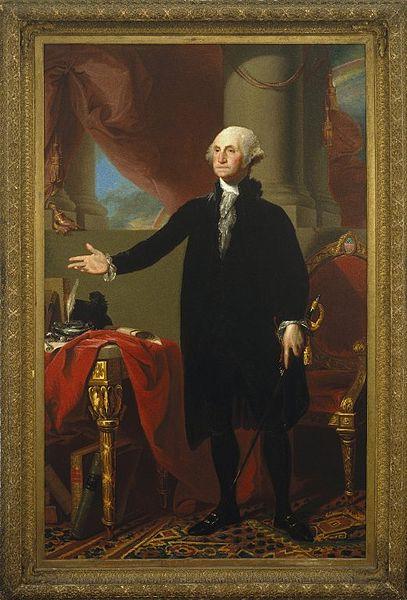
Parlee With The French George Washington first experienced the lands that would become Pittsburgh in the summer of 1753. A twenty-one year old Major in the British Colonial Army, Washington was sent by the Governor of Virginia to the Ohio Country to meet with a French contingent at Fort LeBoeuf, along the upper Allegheny River. He was assigned the task of kindly asking the French to abandon their quest to settle in the region. The French had claimed the Ohio Country, east of the Allegheny Mountains, by right of first discovery. The English, claiming that they had been granted the lands via a treaty with the Iroquois Indians, who in their own right had claimed the lands a century before, now believed that they held dominion over the region. Quarrels were beginning to erupt. English settlers were moving into the region, and the French, along with their Indian allies, were beginning to react with force, defending what they considered an unlawful incursion.
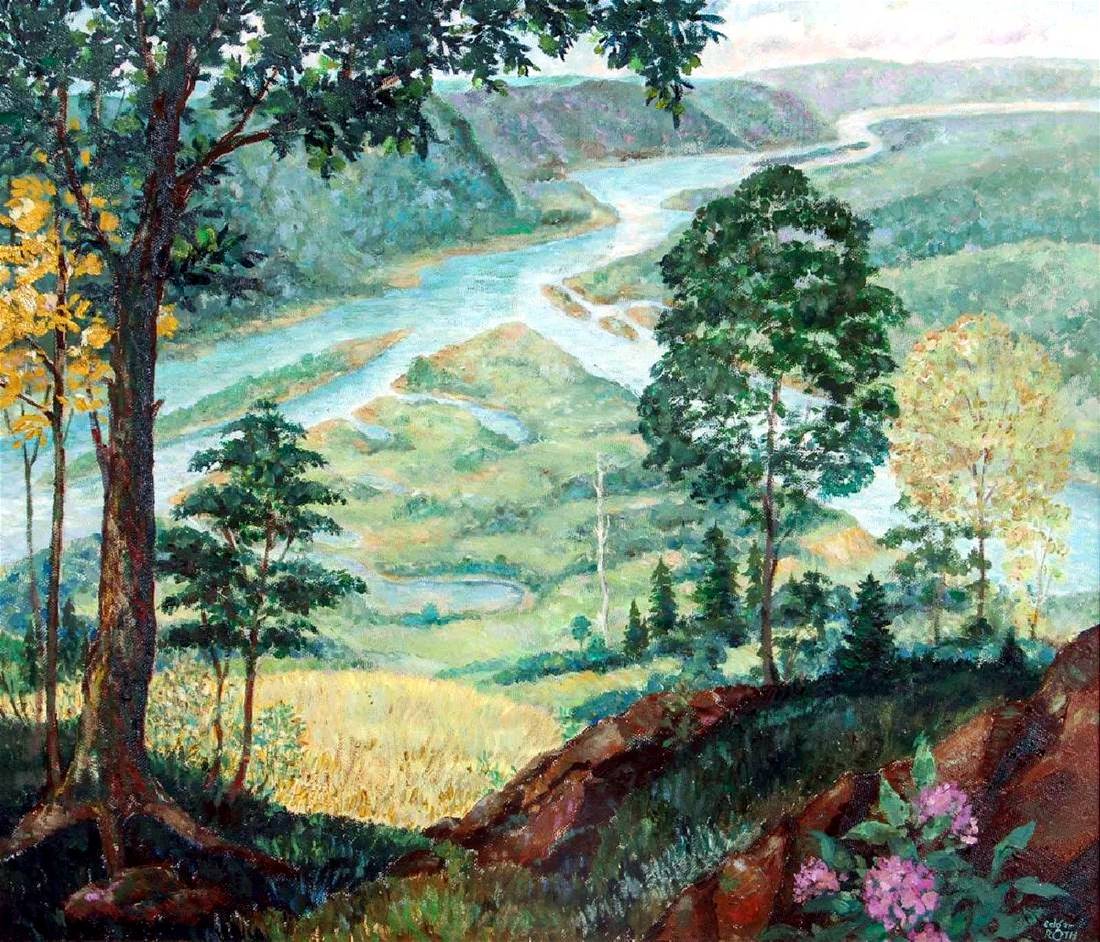
Virginia's Ohio Company had plans to build a fort and settlement along the Monongahela River, a few miles south of the fork of the Ohio. Many of the local tribes, part of the Iroquois nation, had given their blessing to the venture. The River Junction Washington's journey took him north from Virginia, along the Monongahela River, to the fork of the Ohio. From there, he continued north along the Allegheny River to Fort LeBoeuf. His party inspected the site of the proposed fort, then moved on to Logstown, a Native American settlement along the Ohio River, where Washington was invited to a tribal council to discuss the French situation. On November 24, 1753, he passed the river junction, and was quite impressed with the nature of the terrain and the commanding position it presented. Washington wrote in his journal:
"As I got down before the canoe, I spent some time viewing the rivers, and the land in the fork, which I think extremely well situated for a fort, as it has the absolute command of both rivers. The land at the point is twenty-five feet above the common surface of the water; and a considerable bottom of flat well timbered land all around it very convenient for building. The rivers are each a quarter of a mile across, and run here very nearly at right angles; Allegheny, bearing north-east; and Monongahela, south-east. The former of these two is a very rapid and swift running water, the other deep and still, without any perceptible fall."
"As I had taken a good deal of notice yesterday to the situation at the intended fort, my curiosity led me to examine this more particularly, and I think it greatly inferior, either for defence or advantages, especially the latter. A fort at the fork would be equally well situated on the Ohio, and have the entire command of the Monongahela, which runs up our settlement, and is extremely well designed for water carriage, as it is of a deep, still nature. Besides, a fort at the fork might be built at much less expense than the other place." After the tribal council, Washington, his guide Christopher Gist, and several Indian representatives proceeded to their destination. They soon arrived at the French encampment at Venango and, on December 12, 1753, delivered the Governor's message to Commandant Jacques Legardeur de Saint-Pierre. The French commandant respectfully refused. The Race For The Fork Of The Ohio Washington returned to Virginia with the discomforting news, and also his recommendation for an armed presence at the fork of the Ohio. Governor Divwiddie immediately dispatched a small contingent of Virginia colonial militia to the river junction with orders to begin construction of a stockade, known as Fort Prince George. The English were now in a race to beat the French to the prize. The English arrived at the junction on February 17, 1754. In Virginia, a regiment was raised, with Major Washington in command. On April 2, Washington set out with two advanced companies to join the detachment at the river junction. The French, being mindful of the English presence at the fork, rushed a large force of soldiers and Indians to evict the British. The small English garrison was no match for the French. On April 17, they abandoned the fort, and peacefully retreated south towards Virginia. The Jumonville Affair As Washington's force advanced north, they met the Virginia militiamen who had abandoned the fort. He was informed that the French now had command of the area and were erecting a much larger fortification. Undaunted by the news, the English force continued northward to the settlement at Great Meadows. Washington was determined to meet and engage his French counterparts and regain control of the area. On May 28, the British encountered a small French reconnaissance force led by Ensign Joseph Coulon de Jumonville. Washington's troops ambushed and quickly routed the small French force. Ensign de Jumonville was executed by Tanacharison, one of Washington's Indian guides. This incident became known as the "Jumonville Affair". The Battle of Jumonville Glen marked the formal beginning of the French and Indian War. A Bitter Defeat at Great Meadows Washington soon learned that a retaliatory force of 700 French and Indians were marching against his 300 Virginians. The English retreated back to Great Meadows and immediately began construction of a stockade, Fort Necessity. Here, his small outnumbered soldiers awaited the French attack.
At noon on July 3, 1754, during a drenching rain, the French struck. The British struggled against the onslaught of both the enemy and the elements. From the beginning of the battle, the half-built stockade offered little protection. The trenches filled with water. British ammunition ran low and their powder was wet, but Washington's force fought on. "We continued this unequal fight," wrote Washington, "with an enemy sheltered behind trees, ourselves without shelter, in trenches full of water, and the enemy galling us on all sides incessantly from the woods, until eight o'clock at night." The Battle of Fort Necessity ended when the French offered to discuss terms and Washington accepted. His soldiers retreated with honors back to Virginia. The French then burned the settlement at Great Meadows and all other British encampments in the region. Many of the local tribes that had favored the British now flocked to the victorious Fleur-de-Lis. It seemed that French control of the Ohio River Valley was secure.
The Hero of the Monongahela The English had other ideas. Although no formal declaration of war had been signed, the British ministry had planned elaborate counteroffensives to remove the French presence from the entire Northeast. When news of the fall of Fort Necessity reached Benjamin Franklin, he published his famous cartoon of the snake cut into thirteen pieces: "Unite or Die." General Edward Braddock was named supreme commander of British forces in North America. One of his aides was George Washington, now a Colonel. Braddock's aim was to strike back at the French Fort Duquesne, wresting control of the vital river junction with one powerful blow.
In February an army was raised for the task. On May 29, 1755, Braddock set out from Cumberland, Maryland with a column some 2,100 strong. The command consisted of the 44th and 48th regiments, including over 500 British regulars and militiamen from several colonies, with artillery and support troops. In June they crossed the Great Divide, the Allegheny Mountains, into the Ohio River Country, and by July had reached a point nearly eight miles from the forks, near present-day McKeesport is located. The French knew of the British approach and prepared a force of 250 soldiers and 600 Indians to intercept them. Note: Among the Indians was an Ottawa chief named Pontiac, who in 1763 would lead an unsuccessful Indian rebellion against the British.
On July 8, 1755, Braddock sent Colonel Washington and a scout to meet with a French delegation who requested that the British halt their advance and negotiate a peaceful withdrawal of the French garrison. Braddock was not willing to negotiate. The following day, Braddock's column crossed the Monongahela River, south of the French fortress. There they met the French force in what is referred to at the Battle of the Monongahela, or simply, Braddock's Defeat. The engagement began at two o'clock. The British force was surprised and routed by their French adversaries. General Braddock was mortally wounded and after three hours of intense combat, Colonel Washington took charge.
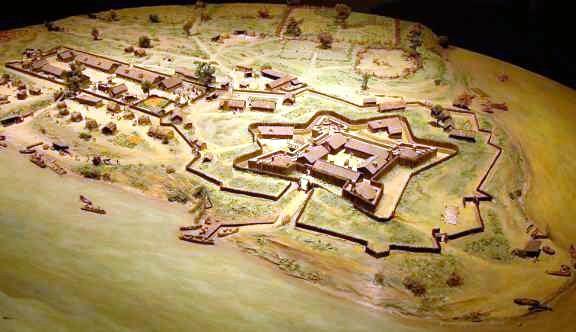
Washington had two horses shot out from underneath him during the battle. Despite this, he managed to organize a general retreat and lead a successful rearguard action. The British force retraced their route along Braddock's Road. Casualties totalled 456 dead and 421 wounded. For his actions during the battle, George Washington became known as the "Hero of the Monongahela." Under The Care Of The Great Spirit Following this resounding defeat, in which Colonel Washington was the only British officer to emerge without a wound, Washington gathered the remaining troops and retreated back to Fort Cumberland in western Maryland, arriving there on July 17, 1755. The next day, Washington wrote a letter to his family explaining that after the battle was over, he had taken off his jacket and had found four bullet holes through it, yet not a single bullet had touched him; several horses had been shot from under him, but he had not been harmed. He told them: "By the all powerful dispensations of Providence, I have been protected beyond all human probability or expectation." Washington openly acknowledged that God's hand was upon him, that God had protected him and kept him through that battle. However, the story does not stop here. Fifteen years later, in 1770, now a time of peace, George Washington and a close personal friend, Dr. James Craik, returned to those same Pennsylvania woods. An old Indian chief from far away, having heard that General Washington had returned to the battlefield, traveled a long way just to meet with him. The aging native sat down with Washington and, face-to-face over a council fire, the chief told Washington that he had been a leader in that battle fifteen years earlier, and that he had instructed his braves to single out all the officers and shoot them down. Washington had been singled out, and the chief explained that he personally had shot at Washington seventeen different times, but without effect. Believing Washington to be under the care of the Great Spirit, the chief instructed his braves to cease firing at him. He then told Washington: "I have traveled a long and weary path that I might see the young warrior of the great battle. I have come to pay homage to the man who is the particular favorite of Heaven, and who can never die in battle." le General Washington Washington soon returned to Virginia with the battered army, where he was officially named Commander-In-Chief of the Virginia regiment. At twenty-three years of age, the veteran officer began preparations for a third assault on the French force. During this time, several small incursions were made into the Ohio River Country by small British forces. Although he was not present, many of these raids were attributed to le General Washington, a sign of respect shown by his French opponents. The Capture of Fort Duquesne By 1758, the British were ready to launch another attempt to regain control of the forks. General George Washington was now an aide to General John Forbes, who commanded an overwhelming force of 6000 British and colonial troops. The French, hopelessly outnumbered, abandoned and burned Fort Duquesne, then retreated to Fort Leboeuf. The British first erected a temporary stockade called Mercer's Fort, then began construction of a large, modern fort, named Fort Pitt, beside the ruins of Fort Duquesne. General Forbes named the new settlement Pittsborough, and the village was chartered a year later. The history of the City of Pittsburgh had begun.
Great Britain now had complete command of the river junction, and retained control until the beginning of the American Revolutionary War began in 1776. The First American President George Washington returned to Pittsburgh briefly in October and November 1770 during an expedition along the Ohio River to inspect land holdings. His travels in the Pittsburgh area are documented in the journal of George Washington written during that nine-week journey. In 1776, he was named Commander of the Continental Army as the thirteen colonies embarked on the war of revolution. Washington's legendary winter stay in Valley Forge, Pennsylvania, in the winter of 1777-1778, could be considered one of the major turning points in the American struggle for freedom. Washington was in command of the American forces at the Siege of Yorktown, in 1781, when Lord Cornwallis surrendered his army, an event that signalled the imminent end of British rule in America. By 1783, the Treaty of Paris officially ended the conflict and the United States of America became a free nation. After the war, Washington took leave of his duties and retired to his home in Mount Vernon, Virginia. Content to live out his days pursuing the life of a farmer and businessman, the esteemed General was soon called upon once more to serve his country.
In 1789, George Washington was elected the first President of the United States of America. Some wanted him to be King, but the modest man accepted only the title of President. Eight years later he became the first head-of-state to voluntarily relinquish his power. In his last historically significant action in Western Pennsylvania, President Washington played a large part in suppressing the Whiskey Rebellion after the March on Pittsburgh in 1794. His dispatch of Federal Militia to put down the insurrection was viewed as a national success, and the episode demonstrated the fledgling government had the willingness and ability to suppress violent resistance to its laws. Washington's Legacy Among his many achievements as a pioneer, soldier and statesman, it can be argued that George Washington did as much, or more, than any man in the birth of the United States of America. Here in the Ohio Country, it can also be said that Washington did as much, or more, than any man in the birth of the City of Pittsburgh. |