|
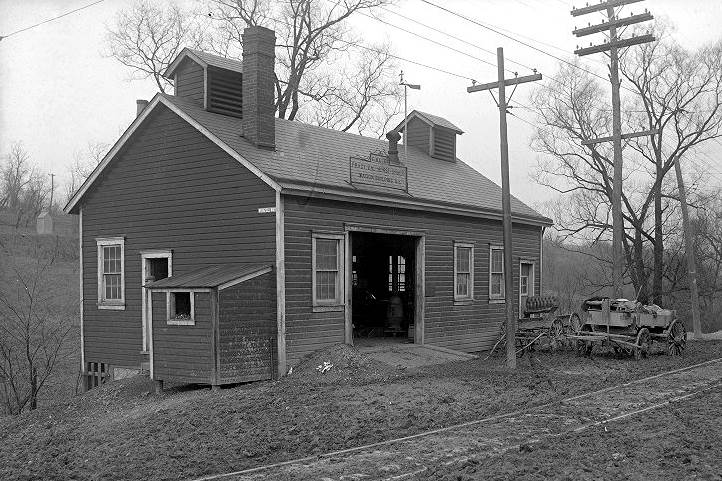
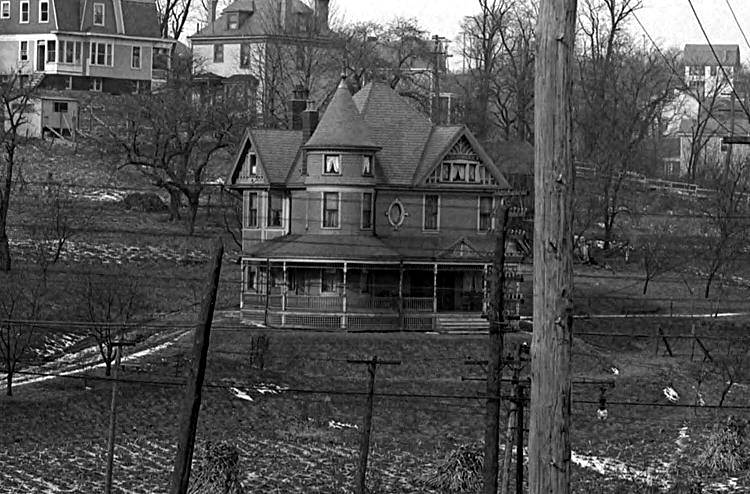
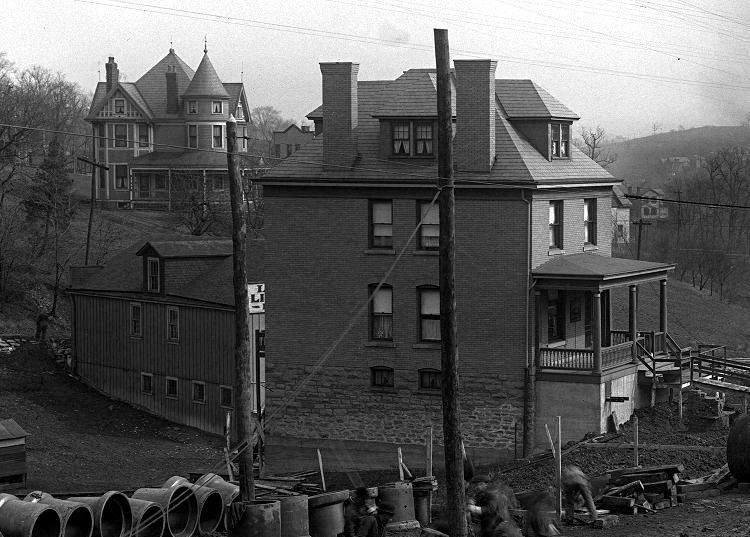
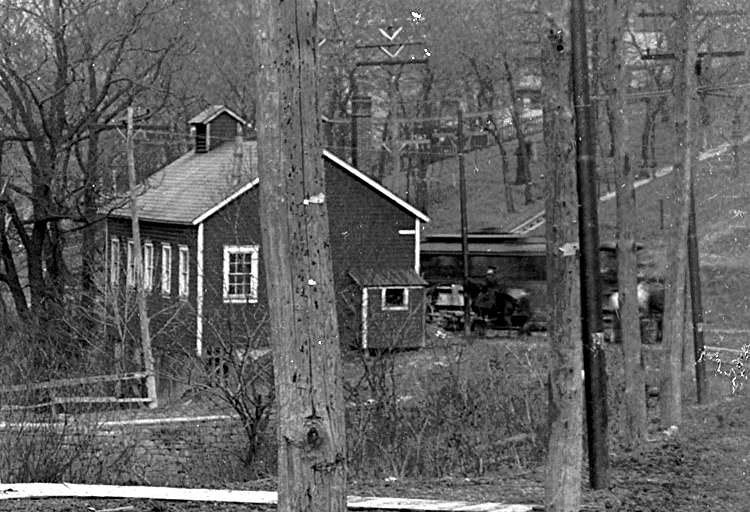
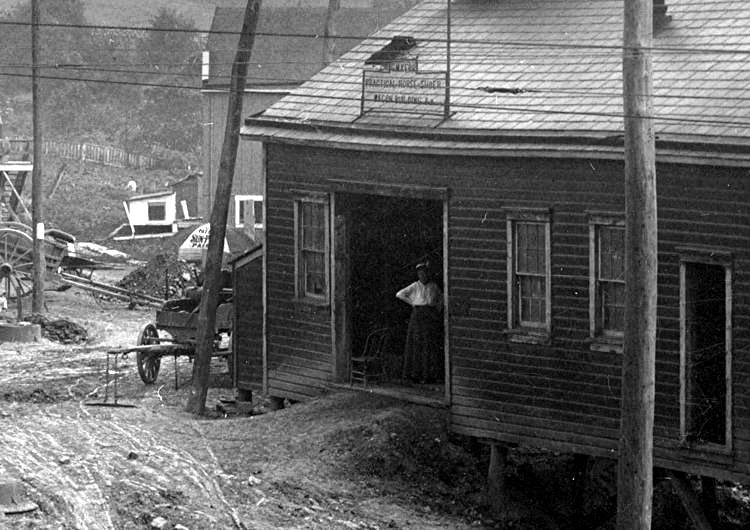
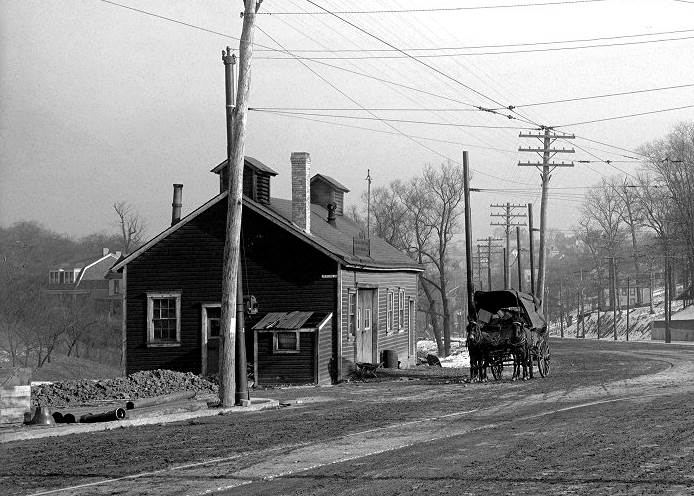
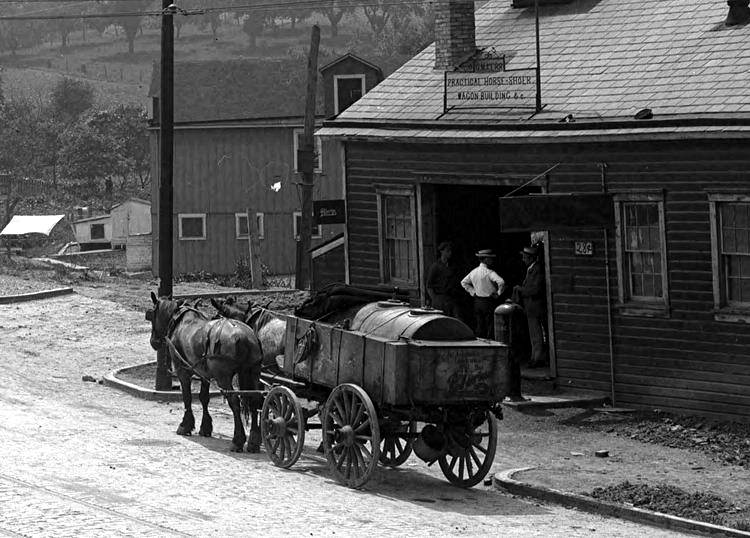
This photo shows the Kerr Homestead in 1909. The estate was owned by George M. Kerr, a successful blacksmith and wagonmaker who settled in the South Hills in the early-1880s. Kerr purchased the three-acres at the corner of West Liberty Avenue and Wenzell Avenue in 1898 and built the family home and a blacksmith shop abutting the intersection. For twenty-one years, while he and his wife raised four children, Kerr operated the forge and repaired wagons for the growing populace. Among his many commercial clients was the Pittsburgh Coal Company, which operated a nearby power plant and maintenance facility.
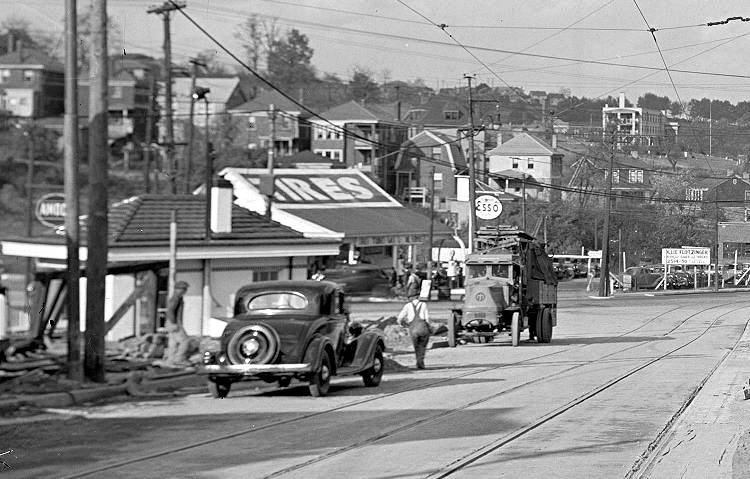
In 1919, Kerr closed down the blacksmith shop. The shop building was moved a few feet back and enlarged into a gasoline and service station, which operated for the next thirty-one years. George Kerr passed away in 1931. The home passed to his son Frank, also an accomplished blacksmith. Frank lived in the house until 1942, when he and his wife moved to a new home on nearby Saranac Avenue.
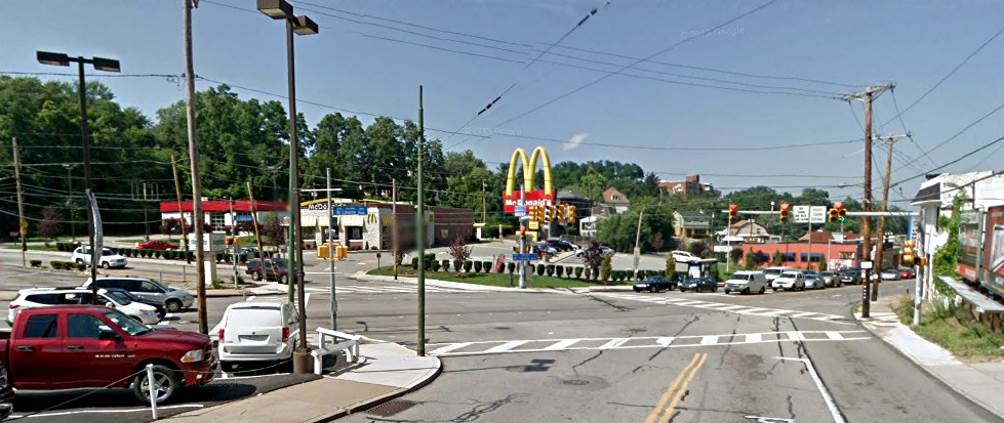
In 1950, the remaining Kerr land and the corner lot were sold for commercial development. The splendid home and the service station were both torn down. In their place, a small shopping plaza was constructed, with the main tenant being an A&P Market. Some years later, the A&P was converted to a Thorofare Grocery Store, which was in operation until the late-1970s. The grocery building was then torn down and replaced with a McDonalds restaurant and a automobile service store, both of which still stand today.
Below is an article
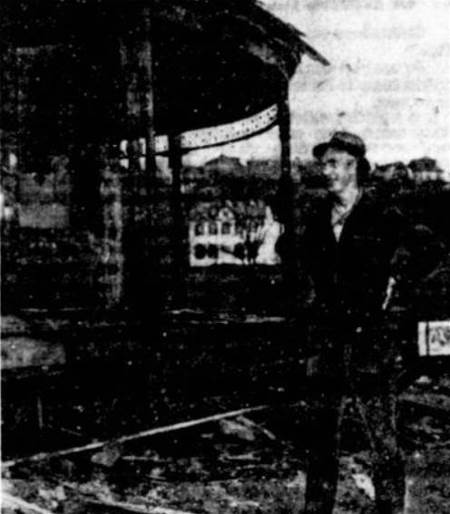
that ran in the January 15, 1950 edition of the Pittsburgh Press, Wreckers Removing Landmark Of Pioneer South Hills Smithy Kerr Homestead Once Wagon Trail Sentinel A pioneer South Hills landmark, built from a prospering blacksmith trade, has at last succumbed to time and taxes. The gabled Kerr Homestead, with its conical turret, is being dismantled. Built when the South Hills was still woodland, the home is on a three-acre slope at West Liberty and Wenzell Avenues, Brookline Junction. Wagon Trail Days Heavy traffic now roars along what was a muddy wagon trail in 1898 when the big frame house was built. Wreckers started tearing it down last Monday, lowering the thick white pine and ripping out the wide stairways and brick fireplaces. The home was built by George M. Kerr, a wagonmaker and blacksmith, who died nineteen years ago. One of his four children, Frank E. Kerr, of 2440 Saranac Avenue, Beechview, is still a blacksmith. One of the last old-time smithies, he shoes ponies, stable horses, traveling with a 75-pound forge and hand blower. Mr. Kerr and his wife, Bertha, can look from their kitchen window at the old home being torn down.
Recalls Good Times "I was only six when we moved in there," tall sinewy Mr. Kerr said. "Sure had some good times." The ground was bought by his father at $300 an acre and the home built for $3500. Carpenters in those days got $2.50 for a day's work. It had eight large rooms, four big fireplaces, and a sprawling third floor attic. In its heyday, the wide lawn was sprinkled with red lillies, and colorful flower beds. Down at the foot of the slope, where Wenzell now cuts into West Liberty, was the small blacksmith shop. Played Near Shop While the "Village Smithy" pounded his anvil, Frank and his brother, Howard, and their sisters, Edna and Ruth, played in a creekbed near the shop. Sometimes, the smithy would entertain his barefoot children by playing the old game, "Shoe the horse, shoe the mare, and let the little colt go bare." The town was then West Liberty Borough and what is now a thick residential district was years away from the drawing board. Across the mud trail from the shop, and up on a high hill, was the big home of Joseph Hughey, a woodworker, and partner of the smithy. Stood Like Sentinels Like two sentinels, the homes stood at the gateway to the sparsely populated South Hills, which was heavily populated by wild pheasants, squirrels and rabbits. The Hughey home, since sold, is still standing. But in a few days, all that will be left of the Kerr home will be a pile of lumber. Even the gas station, which replaced the blacksmith shop in 1919, has been torn down. The Kerrs have not lived in the gray, frame home for eight years. But they've salvaged some antiques, drapes and handpainted wash bowls. "And we'll always have memories," says the modern blacksmith's wife. The Kerr Homestead And Blacksmith Shop Click on images for larger pictures
|